Brother vs Singer Sewing Machines: Which Is Better? (October 2026)
In this Brother sewing machine vs Singer comparison, choose the XM2701 for everyday repairs, the CS7000X for quilting, or the Singer 4423 for regular denim and canvas projects. Your usual fabric and project size matter more than the brand.
On this page (11 sections)
- Brother sewing machine vs Singer: what’s the difference?
- Which brand is better for a beginner?
- Which handles denim and thicker fabrics better?
- Which Brother is better for quilting?
- How much should stitch counts influence your choice?
- What should you check before ordering?
- How should you set up a Brother or Singer machine?
- What mistakes cause poor seams or jams?
- What care will help keep the machine working well?
- Which Brother or Singer sewing machine should you choose?
- Brother vs Singer sewing machines: which is better for you?
Choose Brother for everyday repairs or a quilting-focused setup, and Singer for regular denim and canvas projects among these models. The Brother sewing machine vs Singer decision starts with your usual fabric, the size of your work and the controls you want to learn.
The Brother XM2701 suits clothing repairs and simple garments, while the Brother CS7000X adds room and accessories for quilting. The Singer 4423 is the better match here when thicker fabric is a frequent part of your sewing.
These are model choices, rather than a verdict on every machine either brand makes. A machine suited to your next several projects is a better buy than one chosen for its logo or stitch count.

Brother sewing machine vs Singer: what’s the difference?
The main difference is the work each model supports: routine sewing with the XM2701, quilting with the CS7000X, and thicker-fabric handling with the 4423. Compare those roles before deciding which brand you prefer.
The XM2701 keeps the choice focused on common home sewing tasks. Its free arm lets you position tubular items such as sleeves and pant legs without spreading the whole garment flat.
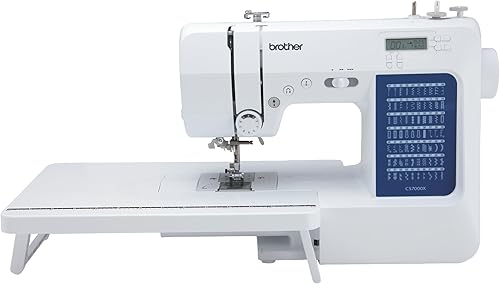
The CS7000X is a computerized sewing and quilting machine with an LCD display. Its included wide table supports fabric beside the needle, while its larger needle-to-arm workspace leaves more room for the part of a project passing through the machine.
The Singer 4423 combines a heavy-duty metal frame with adjustable presser foot pressure and an extra-high presser foot lift. Pressure changes how firmly the foot holds fabric against the feed dogs; lift helps you position layers beneath the foot.
Brother vs Singer sewing machines at a glance
Match workspace and fabric controls to your projects first, then use the stitch and buttonhole options to break a close tie.
| Product | Best for | Stitches | Buttonholes | Workspace | Our score |
|---|---|---|---|---|---|
| Brother XM2701 | everyday repairs | 27 built-in stitches | 1-step auto-size | Free arm | 9.1 |
| Brother CS7000X | new quilters | 70 built-in stitches | 7 one-step auto-size | Larger needle-to-arm space | 8.9 |
| Singer 4423 | denim projects | 23 stitches, 97 applications | 1-step | Free arm | 8.8 |
Which brand is better for a beginner?
The Brother XM2701 is the clearest starting point for everyday beginners in this comparison. Choose it if your first projects are pillow covers, basic seams, clothing repairs or simple alterations.
Its 6 included feet cover buttonholes, zippers, zigzag sewing, narrow hems, blind stitching and button sewing. That gives you a useful starting set without buying a separate foot for each of those tasks.
Skip the XM2701 if quilting is already your main reason for buying a machine. Starting with the CS7000X makes more sense than choosing a smaller setup and immediately wanting additional fabric support.
The Singer can also suit a beginner with a clear plan to sew denim or canvas. Learn pedal control and seam guidance on flat scraps before attempting a thick intersection or a finished garment.
Don't assume computerized controls make a machine too advanced for a first purchase. Our mechanical vs computerized sewing machine guide explains the control choice, while the beginner sewing machine guide helps you narrow your first purchase.
Which handles denim and thicker fabrics better?
The Singer 4423 is the best fit here for regular denim and canvas work because its pressure adjustment and higher foot lift address fabric handling. Singer describes the machine as suitable for denim, canvas and leather.
Choose it for projects where thicker seams are part of the plan, rather than an occasional surprise. Skip it if you mainly want a quilting package with an included wide table or you need the lightest machine to carry between rooms.
A heavy-duty name doesn't set a safe thickness limit. Soft denim, stiff canvas and dense leather place different demands on a needle, and a folded seam can be much harder to sew than a flat piece.
Singer gives the 4423 a maximum speed of 1,100 stitches per minute. Treat that as capacity for suitable work, rather than a target when approaching thick hems or tight corners.
Use a needle suited to the material, and check that your thread works with both the needle and machine. Sew a sample with the same folds and seam allowances as the finished project before committing to the garment.
Stop if the needle struggles or the fabric stops feeding. Pulling the work through can bend the needle; our guide to sewing denim and jeans at home explains how to assess bulky seams.
Which Brother is better for quilting?
The Brother CS7000X is the better quilting choice because its workspace and included accessories address the practical challenge of handling more fabric. Choose it when patchwork, quilt assembly or larger fabric projects are part of your regular plans.
The wide table and the space to the right of the needle do different jobs. The table supports fabric outside the machine, while needle-to-arm space affects how much material you can manage inside that opening.
Neither feature removes the need to support a large quilt. Clear the surrounding table so the weight of the quilt doesn't hang over an edge and pull against your stitching.
The CS7000X includes 10 sewing feet, a quilt guide and a protective hard case. Before buying more quilting accessories, identify what each included foot does and which technique your project requires.
Skip this model if your sewing is almost entirely quick repairs and you don't expect to use the table or wider stitch selection. The XM2701 covers those simpler needs without making quilting features part of the decision.
Compare our best Brother sewing machine picks for other options within the brand. The complete sewing machine buying guide puts workspace, fabric and controls into a broader buying plan.
How much should stitch counts influence your choice?
Buy for the stitches you need, rather than the largest number on the box. Straight stitching, zigzag, a suitable stretch stitch and a buttonhole can matter more to daily work than a long decorative menu.
The XM2701 has 27 built-in stitches, including blind hem, zigzag, stretch and decorative choices. The CS7000X expands that to 70 built-in stitches, with utility, decorative, heirloom and quilting functions.
The Singer 4423 has 23 stitches with 97 stitch applications. Applications describe ways to use stitches, so 97 applications shouldn't be read as 97 separate built-in stitches.
Buttonholes are a more useful distinction if you plan to make shirts or other buttoned garments. All 3 provide a one-step buttonhole function, and the CS7000X offers 7 auto-size styles.
For repairs, check that the machine supports the seam or finish you actually need. For decorative sewing, plan how you'll use those extra patterns before making them the deciding feature.
What should you check before ordering?
Check your sewing space, carrying needs and first project supplies before choosing between these machines. A useful feature has little value if you can't set up comfortably enough to use it.
The XM2701 weighs 12.6 lb, the CS7000X weighs 14 lb, and the Singer 4423 weighs 17.1 lb. That difference matters if the machine must come out of a cupboard for every sewing session.
Allow room for fabric in front of and behind the needle, plus space for scissors and pins. If you choose the CS7000X, account for the attached table rather than measuring only the machine body.
The Singer includes all-purpose, zipper, buttonhole and button sewing feet, along with a quilting guide and a soft-sided dust cover. Compare those tools with your first project instead of assuming a larger accessory count always means a better fit.
Both Brother models here are intended for US use at 120 volts. Check electrical suitability before ordering for another country; Brother warns that other use or sale may void warranty coverage.
Keep some room in your sewing budget for suitable fabric, thread, replacement needles and cutting tools. Extra stitch options won't compensate for a worn needle or poorly cut pieces.
How should you set up a Brother or Singer machine?
Follow the exact model's manual for threading, bobbin loading and the first seam. All 3 include an automatic needle threader and a top drop-in bobbin, but those aids don't replace correct setup.
Start on a firm table with a comfortable chair and enough light to see the needle area. Position the pedal so you can control it without stretching your leg or bracing the machine with your hands.
Use the specified bobbin type and follow the marked thread path. A bobbin that fits into the opening can still be the wrong size or shape for the machine.
Raise the presser foot while threading the upper path so the thread can enter the tension system properly. Follow the manual's instructions for needle position and use of the threader.
Fit the right foot for the selected stitch, then check needle clearance as the manual directs. Pay particular attention when switching between straight stitching, wider stitches and specialty feet.
Make the first seam on scraps of your project fabric, including the same number of layers. Check both sides for balanced stitches, then change one setting at a time if the seam needs adjustment.
What mistakes cause poor seams or jams?
Check threading, needle condition and fabric feeding before blaming the brand. Many seam problems begin with setup or technique, so start with those checks rather than making several tension changes at once.
A common mistake is threading with the presser foot down, which can keep the upper thread from seating correctly. If loops form underneath, rethread the upper path and reload the bobbin according to the manual.
Another mistake is pulling fabric to make it move faster. Guide it gently and let the feed dogs advance it; if it stalls, stop and find the cause.
Use a fresh needle of the correct type when changing materials or investigating skipped stitches. A needle can be bent or dull even when damage is hard to see.
Don't use the needle threader to force unsuitable thread through a small needle eye. Match needle and thread first, and follow any threader limits in the manual.
If fabric gets trapped, stop sewing and disconnect power before clearing it as directed. Our guide to why a sewing machine keeps jamming walks through the likely causes without guessing at tension settings.
What care will help keep the machine working well?
Remove lint regularly and follow the manual's maintenance instructions. Sewing creates debris around the feed dogs and bobbin area, especially during projects that shed fibers.
Disconnect power before cleaning, changing the needle or opening covers as directed. Use a suitable brush and remove accessible lint without pushing it deeper into the mechanism.
Only oil the machine where and when the manual instructs you to do so. Adding oil to an unspecified area can create another problem rather than solve a noise or stiff movement.
Keep bobbins and feet labeled by model if you have access to more than one machine. Similar-looking accessories aren't proof of compatibility.
Cover the machine when stored, and put it away clean and dry. Before the next project, check the needle, thread path and bobbin rather than assuming the previous setup still suits the new fabric.
Which Brother or Singer sewing machine should you choose?
Choose the machine that fits your most common project, then use accessories and carrying weight to settle any remaining doubt. You don't need to plan for every sewing task you might try someday.
Pick the Brother XM2701 if most of your work will be repairs, hems and simple garments. Skip it if your purchase is mainly about quilting workspace or regular thick canvas projects.
Pick the Brother CS7000X if you want to learn quilting or manage larger projects with an included table. The Brother CS7000X review helps you decide whether those additions will earn their place in your sewing area.
Pick the Singer 4423 if denim and canvas are frequent choices and you want adjustable fabric pressure. Read our Singer 4423 review before deciding how its controls and accessories fit your work.
If your needs extend beyond these models, use sewing machine brands compared to broaden the search. Compare individual machines within each brand rather than assuming every Brother or Singer has the same strengths.
Brother vs Singer sewing machines: which is better for you?
The final Brother sewing machine vs Singer decision should come from a short project list. Write down your next 3 projects, their fabrics and the thickest seam each will require.
Mostly repairs points to the XM2701; quilting points to the CS7000X; repeated denim or canvas work points to the 4423. If those projects pull in different directions, prioritize the work you'll do most often and check the hardest seam against the machine manual.
For a wider shortlist, the best sewing machines guide can help you compare other options against that same project list.
Frequently asked questions
Is Brother or Singer better for beginners?
The Brother XM2701 is the best fit here for beginners focused on repairs and simple garments. Choose the CS7000X if quilting is your main goal, or the Singer 4423 if denim and canvas dominate your plans.
Start with the machine that fits your first few projects rather than choosing by brand alone.
Is Singer 4423 better than Brother XM2701 for denim?
The Singer 4423 is the better match here for regular denim work because it offers adjustable presser foot pressure and an extra-high lift. Check the finished seam thickness, not just the fabric name.
A folded jeans hem can contain several layers, so use suitable needles and follow the machine manual.
Which Brother sewing machine is better for quilting?
The Brother CS7000X is the better quilting choice of these 2 models because it includes a wide table and has more needle-to-arm workspace. The table supports fabric beside the needle, while the extra room helps you manage the quilt.
Plan additional table support for fabric that extends beyond the machine.
Do Brother and Singer sewing machines use the same accessories?
Check compatibility for the exact model before sharing accessories between Brother and Singer machines. Bobbins and presser feet can look alike without fitting correctly, and needle choice must follow the manual.
Keep the original accessories labeled so you can identify the right parts when you replace them or buy extras.
How should I choose between Brother and Singer?
Choose the XM2701 for everyday alterations, the CS7000X for quilting space, or the Singer 4423 for regular thicker-fabric projects. Then check which feet your first projects need and where the machine will sit.
A useful workspace and the right accessories matter more than a long menu of decorative stitches.