7 Best Sewing Machines for Beginners (October 2026)
The best beginner sewing machines include the Brother XM2701 for first home projects, the Brother XM3700 for exploring garment details, and the Brother CS5055 for decorative garment projects.
On this page (8 sections)
- Which beginner sewing machine fits your first projects?
- How did we choose beginner sewing machines?
- How do you choose the best sewing machine for beginners?
- What can a beginner machine sew, and where are its limits?
- How should you set up a sewing machine for the first time?
- Which common beginner mistakes cause poor seams?
- What care does a beginner sewing machine need?
- Which beginner sewing machine should you choose?
The Brother XM2701 is the best sewing machine for beginners learning repairs, simple garments and everyday home projects. Its threading help and useful stitch selection make it our first choice, while the Brother CS5055 suits decorative work and the Janome Arctic Crystal suits learners who want mechanical controls with adjustable settings.
Start with the projects you expect to finish in your first month. A cushion cover, a loose hem and a stretch-knit shirt need different stitches, feet and handling skills.
For a broader shortlist, see our best sewing machines guide. Our guide to choosing a sewing machine explains how stitches, motors and feet fit different projects.
Our picks at a glance
-
1

-
2

-
3
Which beginner sewing machine fits your first projects?
Choose the Brother XM2701 for general learning, then consider another model only when its controls or features solve a specific need. The differences below matter more than collecting the longest list of stitches.
Brother XM2701
- 27 built-in stitches
- Automatic needle threader
- Drop-in top bobbin
- 6 sewing feet
Threading help and a useful stitch range make the XM2701 our first choice for learning repairs, hems and simple home projects.
Pros
- Automatic needle threader
- Drop-in top bobbin
- Free arm for cuffs and sleeves
Cons
- Intended for 120-volt use in the US
- Fewer decorative choices than the CS5055
The XM2701 suits a beginner who wants to start with useful tasks: repairing an open seam, making a fabric bag or sewing a simple cushion cover. Its 27 built-in stitches include blind hem, zigzag, stretch and decorative options, so learning the basics doesn't limit you to straight seams.
An automatic needle threader and drop-in top bobbin help with setup. You still need to follow the full threading path, but these features reduce the small, fiddly steps that can interrupt a short sewing session.
The 6 included feet cover everyday jobs such as zippers, buttonholes and blind stitching. Its free arm also gives you a way to work around suitable sleeves and pant legs as your alteration skills grow.
Buy it for varied home sewing; skip it if computerized selection is a priority. Read our Brother XM2701 review for a closer look at this first-machine choice.
Brother XM3700
- 37 built-in stitches
- Automatic needle threader
- Drop-in top bobbin
- 5 sewing feet
The XM3700 suits beginners moving from plain seams into decorative details, buttonholes and small clothing projects.
Pros
- One-step auto-size buttonhole
- Built-in accessory storage
- Free arm for small clothing
Cons
- Intended for 120-volt use in the US
- Extra stitch choices are unnecessary for occasional repairs
The XM3700 fits a beginner whose plans already include garment details, decorative stitching or small patchwork projects. Its 37 built-in stitches give you more patterns to explore, while the one-step auto-size buttonhole supports clothing projects with button closures.
Its included feet cover zigzag, zippers, blind stitching, buttonholes and button sewing. That selection makes sense for someone learning several clothing techniques rather than repeating only plain seams.
The removable accessory compartment keeps small supplies together and exposes the free arm for cuffs, sleeves and baby clothes. Small openings still need to fit around the arm, so plan how you'll reach the seam before starting.
Choose it when those extra techniques are on your project list. Skip it if you mainly need occasional repairs, since unused decorative stitches won't make a basic seam easier to sew.
Brother CS5055
- 60 built-in stitches
- LCD display
- 7 one-step buttonholes
- 7 sewing feet
An LCD display, decorative stitches and multiple buttonhole styles suit a beginner who wants to explore garment details.
Pros
- LCD stitch selection
- 7 one-step buttonhole styles
- Larger needle-to-arm workspace
Cons
- More options to learn before sewing
- Intended for 120-volt use in the US
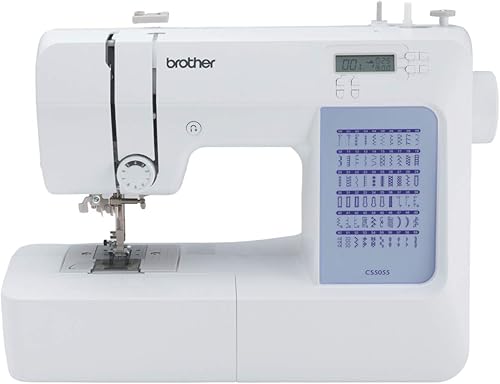
The CS5055 suits beginners who want to learn computerized stitch selection while exploring decorative garment work. Its LCD display provides a different way to choose stitches from the physical dial approach used on several other picks.
There are 60 built-in stitches and 7 one-step buttonhole styles. The buttonhole variety is a useful reason to choose this model if shirts, dresses or embellished clothing are part of your plans.
The machine includes 7 sewing feet, a metal frame and a fixed needle bar. Its larger needle-to-arm workspace also gives you room to arrange more fabric, though you should still support a bulky project on the table.
Buy it for stitch and buttonhole variety; skip it if you want fewer choices at the controls. Begin with one utility stitch and learn the selection process before working through the decorative patterns.
Brother GX37
- 37 built-in stitches
- Stitches printed on the machine
- Automatic needle threader
- 6 sewing feet
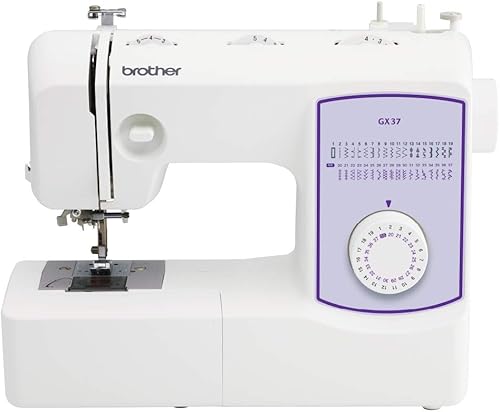
Printed stitch choices and dial selection suit beginners who want a visible reference while learning everyday sewing.
Pros
- Stitches printed on the machine
- Automatic needle threader
- Narrow hem foot included
Cons
- Intended for 120-volt use in the US
- Fewer buttonhole styles than the CS5055
The GX37 fits beginners who learn well from visible stitch symbols and a selector dial. Its stitch choices are printed on the machine, letting you connect a pattern with its control setting without relying only on a separate chart.
Its 37 built-in stitches support everyday garment construction and decorative work. An automatic needle threader and drop-in top bobbin provide setup help, while the free arm supports suitable narrow clothing sections.
The included accessories give it a practical angle for someone interested in hems and alterations. Along with zipper, blind stitch and buttonhole feet, it includes a narrow hem foot for learning rolled-edge work on suitable fabrics.
Choose it if a visible reference helps you learn; skip it if you prefer screen-based selection. The narrow hem foot is useful, but practice feeding scrap fabric into it before using it on a finished garment.
Singer M1500

- 6 built-in stitches
- 57 stitch applications
- Preset stitch length and width
- 4-step buttonhole
Preset stitch settings keep choices limited for beginners who want to learn plain seams, basic repairs and simple crafts.
Pros
- Preset stitch length and width
- Marked threading guides
- Portable design for classes
Cons
- Buttonhole takes 4 steps
- Preset settings limit adjustment for different fabrics
The Singer M1500 is a sensible choice for beginners who want fewer settings to manage during occasional repairs and simple crafts. Its preset stitch length and width let you select a stitch and focus on guiding the seam.
It has 6 built-in stitches that provide 57 applications. Those figures describe different things: applications are ways to use stitches, so this isn't a machine with 57 separate stitch patterns.
Marked threading guides help you follow the upper thread path and wind the bobbin. Singer also offers the CREATIVATE app with model-specific manuals, tutorials and troubleshooting support.
Buy it if limited adjustment is part of the appeal. Skip it if you want to change stitch length and width for different fabrics, or expect to sew many buttonholes.
Its four-step buttonhole requires you to move through the stages yourself. That is a reasonable skill to learn, but a one-step system is the more convenient choice for repeated garment work.
Janome Arctic Crystal

- 15 built-in stitches
- 4-step buttonhole
- Interior metal frame
- Free arm
Mechanical controls and adjustable stitch settings suit beginners who want to learn how length and width affect a seam.
Pros
- Adjustable stitch width and length
- Snap-on presser feet
- Extra-high presser foot lift
Cons
- Buttonhole takes 4 steps
- Fewer decorative stitches than the Brother picks
The Janome Arctic Crystal suits a beginner who wants mechanical controls with room to adjust a seam. Its stitch length and width adjustments let you learn how settings affect the look and behavior of your sewing.
The 15 built-in stitches cover a useful range for repairs, garments, patchwork and light quilting. Its four-step buttonhole requires more involvement than a one-step option, so consider how often your projects will need button closures.
Snap-on feet make changing tasks straightforward, and the extra-high presser foot lift helps when positioning fabric under the foot. That extra clearance isn't a promise that the machine can sew through every thick stack.
The included feet cover general sewing, blind hems, buttonholes and zippers. Choose it if learning manual adjustments appeals to you; skip it if preset settings or computerized selection would better match your learning style.
Its compact design also suits a shared work area where you put the machine away between projects.
Singer M3500

- 32 stitches, 110 applications
- One-step buttonhole
- Automatic needle threader
- Free arm
Adjustable stitch settings and a one-step buttonhole suit beginners planning a mix of clothing, crafts and decorative work.
Pros
- Basic, decorative and stretch stitches
- One-step buttonhole
- Automatic needle threader
Cons
- More settings to learn than the M1500
- Broad stitch range is unnecessary for simple mending
The Singer M3500 fits beginners planning a mix of clothing, crafts and decorative sewing. Its 32 stitches provide 110 applications, including uses for basic, decorative and stretch stitches.
Unlike the M1500, it lets you adjust stitch length and width. That flexibility matters when you want to learn how a stitch behaves on different materials instead of relying on preset settings.
An automatic needle threader and one-step buttonhole address two useful setup and garment-making tasks. The free arm helps with suitable cuffs and hems, and the included edge/quilting guide offers a reference for consistent seam placement.
Choose it if you want adjustable settings and several sewing interests. Skip it if you mainly need to close the occasional open seam, since a broad stitch range adds little to that job.
For your first sessions, leave the decorative options aside. Learn threading, a plain seam and a suitable edge finish before adding more patterns to a project.
How did we choose beginner sewing machines?
We compared setup, stitch controls, useful accessories and project fit. A first machine should support the work you want to learn without making every session start with unnecessary choices.
Threading aids matter because you use them repeatedly. Buttonhole systems matter more for clothing than for flat crafts, while adjustable settings help learners who want to understand how stitches change.
The scores reflect those trade-offs. A lower-ranked model can still be the better match when its control style suits you, but a longer stitch menu alone doesn't move it ahead.
How do you choose the best sewing machine for beginners?
Choose by your first projects and preferred controls, then compare the accessories you'll actually use. The table helps narrow the options, but matching a machine to a real task is the deciding step.
| Product | Best for | Stitches | Threading | Included feet | Our score |
|---|---|---|---|---|---|
| Brother XM2701 | first home projects | 27 built-in | Automatic needle threader | 6 | 9.1 |
| Brother XM3700 | exploring garment details | 37 built-in | Automatic needle threader | 5 | 8.4 |
| Brother CS5055 | decorative garment projects | 60 built-in | 7 | 8.3 | |
| Brother GX37 | learning with dials | 37 built-in | Automatic needle threader | 6 | 8.1 |
| Singer M1500 | occasional simple repairs | 6 built-in, 57 applications | 7.4 | ||
| Janome Arctic Crystal | learning manual adjustments | 15 built-in | 7.1 | ||
| Singer M3500 | varied sewing hobbies | 32 stitches, 110 applications | Automatic needle threader | 6.9 |
Which beginner sewing machine features matter most?
Prioritize a clear threading path, understandable stitch selection and the basic stitches your projects require. An automatic needle threader handles the needle's eye; it doesn't route the upper thread through the rest of the machine.
A drop-in bobbin can make loading approachable, but correct bobbin type, insertion direction and thread routing still matter. Follow the machine's own diagram rather than assuming every bobbin system works the same way.
The Brother models here are intended for US use at 120 volts. Confirm power requirements before buying a machine for another country.
Match stitches to fabric rather than chasing totals
Straight stitch handles many seams in woven fabric. Zigzag can help finish raw edges and serve some stretch-related tasks, while dedicated stretch stitches offer other options for suitable knit projects.
Decorative patterns are worthwhile when you have a use for them, such as trim on a pocket or a craft detail. They don't replace accurate cutting, consistent seam allowances or good fabric control.
For knit clothing, check the pattern's stitch guidance before choosing a machine. A conventional straight seam may break when the fabric stretches, even if it looks neat while lying flat.
Choose controls you can understand while seated
Mechanical controls suit learners who want physical dials and direct adjustments. Computerized selection suits people who prefer choosing settings through electronic controls.
Neither style guarantees an easier first week. Think about whether you'll understand how to return to a basic stitch after changing tasks.
Our explanation of what a computerized sewing machine is covers the control differences. If possible, look at the controls from a seated position and check that their symbols are readable to you.
Consider buttonholes and presser feet early
A one-step buttonhole reduces the number of stages you manage yourself. A four-step system is workable, but it asks you to follow the sequence and keep the size consistent.
Buttonholes deserve more weight if you plan to make shirts or dresses. They matter much less if your first projects are tote bags, cushion covers and repairs.
Feet should match techniques, too. A zipper foot helps you sew near zipper teeth, while blind hem and narrow hem feet serve different finishing methods.
Don't buy a large accessory bundle before choosing your first project. Feet must fit the machine and suit the technique, and the included set may already cover what you need.
Plan for fabric space and storage
Your table needs room for the fabric as well as the machine. A large piece hanging off the edge can pull on the seam, so support its weight rather than tugging it back toward the needle.
A free arm helps with some cuffs and pant legs, but very small openings may not fit around it. You can sometimes sew them flat before closing the side seam when the project instructions allow.
For a shared room, plan where the machine, pedal, cord and accessories will go between sessions. A stable setup that is easy to use matters more than a machine that barely fits on a shelf.
What can a beginner machine sew, and where are its limits?
A beginner machine is a practical starting point for ordinary repairs, woven-fabric projects and simple garments. Thick layers, very stretchy fabric and large quilts ask more of both the machine and your technique.
Start with a stable woven fabric such as quilting cotton. Slippery fabric, loose knits and bulky intersections make it harder to tell whether a problem comes from setup or fabric handling.
For denim, pay attention to the thick crossings where several seams meet. A short section at a folded jeans hem can be more demanding than a long seam through flatter layers.
An interior metal frame or an extra-high foot lift doesn't establish a machine's capacity for repeated heavy work. Read whether a home sewing machine can sew denim and jeans before making that your main job.
Quilt piecing starts with manageable flat pieces, while quilting a large layered project requires more room and fabric support. Decorative stitch count isn't a substitute for space to move the quilt.
How should you set up a sewing machine for the first time?
Follow the manual and make a practice seam on matching scraps before sewing the project itself. A careful setup helps you spot problems while they are still easy to correct.
- Create a stable workspace. Put the machine on a firm table, place the pedal where your foot rests comfortably and keep cords clear of your chair.
- Check the needle and foot. Use the manual's needle guidance for your fabric and confirm that the needle is installed correctly.
- Wind and insert the correct bobbin. Similar-looking bobbins aren't always interchangeable, so use the type required for the model.
- Thread the upper path fully. Follow the manual's position for the presser foot and needle while threading.
- Select a basic stitch. Check the required foot and settings before starting, especially after changing from another stitch.
- Sew through matching layers. Use scraps with the same folds or seam crossings as your project, then inspect both sides.
Switch off or unplug the machine as instructed before changing the needle, fitting accessories or cleaning. Keep fingers clear of the needle path while positioning fabric.
For your first seam, watch the fabric against the seam guide rather than staring only at the needle. Guide it lightly and let the feed mechanism move it forward.
Try starting, stopping, turning a corner and securing a seam before making something useful. A simple envelope cushion cover gives you practice with straight seams and hems without adding zippers or buttonholes.
Which common beginner mistakes cause poor seams?
The most useful first checks are threading, needle choice and fabric handling. Changing several settings at once makes it harder to find the cause of a poor seam.
Changing tension before checking threading
Loops under the fabric can come from incorrect upper threading. Raise the presser foot as directed, rethread the full path and check the bobbin before making large tension changes.
Use the manual's starting setting, then change one thing at a time on scraps. Our guide to sewing machine tension problems explains how to work through uneven stitches.
Pulling fabric through the machine
Pulling can bend the needle and distort the seam. Support the fabric's weight and guide its direction while the machine feeds it.
Stop if the fabric won't advance. Check for tangled thread, a thick obstruction or an incorrect setup rather than pressing harder on the pedal.
Keeping the same needle for every fabric
Needle type and size should suit the fabric and thread. A damaged or unsuitable needle can contribute to skipped stitches, snags and breakage.
Replace a bent or damaged needle before continuing. See our guide to why a sewing machine skips stitches if the problem remains after basic setup checks.
Sewing over pins or forcing thick crossings
Remove pins before they reach the needle. At a thick seam crossing, slow down and follow the manual's advice rather than forcing the fabric under the foot.
If the machine struggles, stop and reassess the project. Repeatedly driving the needle into an unsuitable stack risks damage to both the fabric and machine.
Skipping practice buttonholes
Make a sample buttonhole using the same fabric layers and interfacing as the garment. Check its size with the actual button before cutting the opening.
Fabric support changes the result, so a sample on a single loose scrap isn't enough for a reinforced button band. Mark the placement carefully before working on the garment.
What care does a beginner sewing machine need?
Keep the machine free of lint, fitted with a sound needle and stored under cover. Follow its manual for cleaning access, lubrication and service rather than applying the same routine to every model.
Brush lint from accessible bobbin and feed areas as directed. Avoid blowing debris deeper into the mechanism, and don't remove parts beyond the manual's instructions.
Oil only where the manual tells you to, using the specified oil. Adding oil to the wrong place can stain fabric or create other problems.
Replace the needle after damage or when stitching problems suggest it is worn. Check it promptly after striking a pin or the needle plate.
Keep a small kit with compatible bobbins, suitable needles, a seam ripper and the recommended cleaning brush. Label bobbins or store them separately if you use more than one machine type.
Before putting the machine away, remove loose thread and cover it. Stop using it and seek service if you notice grinding, a damaged cord or repeated needle strikes that basic setup checks don't resolve.
Which beginner sewing machine should you choose?
The best sewing machine for beginners is the one that fits your next few projects and has controls you can learn comfortably. Choose from this list using the task that matters most:
- Brother XM2701: Your first projects mix repairs, hems, simple garments and home sewing.
- Brother XM3700: You want to explore decorative clothing details and small garment work.
- Brother CS5055: You want computerized selection and several buttonhole styles.
- Brother GX37: You prefer a dial with stitch choices visible on the machine.
- Singer M1500: You want limited settings for occasional repairs and simple crafts.
- Janome Arctic Crystal: You want to learn mechanical adjustments for different seams.
- Singer M3500: You plan several sewing hobbies and want adjustable stitch settings.
Choose your first pattern before ordering extra accessories. For more help matching that project to a machine, use our home sewing machine buying guide.
Our top 3 picks at a glance
-
1
-
2
-
3
Frequently asked questions
What should a beginner look for in a sewing machine?
Choose clear controls, straightforward threading and stitches that match your first projects. Straight stitch, zigzag and a buttonhole option cover many early tasks.
Check which presser feet come with the machine, whether you can adjust stitch settings, and how much space you have for both the machine and fabric.
Is a mechanical or computerized sewing machine easier for a beginner?
Either can be a good first machine if its controls make sense to you. Mechanical models use physical controls, while computerized models use electronic stitch selection.
The Brother CS5055 offers an LCD display; the Janome Arctic Crystal offers mechanical controls. Choose by how you want to select and adjust stitches.
How many stitches does a beginner need?
A small set of useful stitches is enough to start. Straight stitch handles seams, zigzag helps with some edge finishes, and a buttonhole option supports garment projects.
Stretch stitches become useful for knits. Decorative choices are optional, so avoid choosing a machine mainly because it has the largest stitch count.
Can a beginner sewing machine hem clothes?
Yes, a beginner sewing machine can hem many garments when the fabric, needle and stitch suit the task. Practice on matching scraps before shortening the garment.
A free arm helps with some sleeves and pant legs, but thick seam crossings need care and may exceed what a particular machine can handle.