How to Choose a Sewing Machine: Stitches, Motor, Feet
To decide how to choose a sewing machine, start with your regular fabrics and projects. Prioritize the stitches, presser feet, fabric control and workspace those jobs need.
On this page (12 sections)
- How to choose a sewing machine for your regular projects
- How many stitches do you actually need?
- Does the motor need to be heavy duty?
- Which presser feet will you use?
- How much workspace and storage room do you need?
- Should you choose mechanical or computerized controls?
- Which setup features are worth paying attention to?
- Which of these four sewing machines suits your projects?
- What should you check before placing an order?
- How should you set up a new sewing machine?
- How do you care for the machine and avoid common mistakes?
- How do you choose a sewing machine and make the final decision?
To work out how to choose a sewing machine, match its fabric handling, useful stitches, presser feet and workspace to the projects you'll sew most. Start with those needs before comparing decorative stitch counts or maximum speed.
Write down 3 realistic projects, such as shortening cotton pants, making knit tops or piecing a quilt. Name the fabrics too, because hemming lightweight trousers and crossing a folded jeans seam are different jobs.
For a broader overview of machine types and home sewing needs, see our complete home sewing machine buying guide.
How to choose a sewing machine for your regular projects
Choose for the work you'll do often, with room for one likely next step. Buying around an ambitious project you may never start can leave you with extra controls and accessories you rarely use.
For each project, identify the seam, fabric and finished shape. A pillow cover needs basic seams, a zippered pouch needs close stitching beside a zipper, and a shirt adds buttonholes and more detailed construction.
Use this table to turn your project list into a short set of requirements:
| Your main project | Prioritize | Give less weight to |
|---|---|---|
| Mending and basic alterations | Straight stitch, zigzag, simple threading, free arm | Large decorative stitch menus |
| Woven garments | Zipper foot, buttonholes, adjustable stitch length | Maximum sewing speed |
| Knit garments | Suitable stretch stitches, correct needles, fabric control | Decorative patterns |
| Quilting | Space beside the needle, fabric support, suitable feet | Free arm size alone |
| Denim and canvas | Layer handling, presser foot clearance, suitable needles | Stitch count |
| Classes and shared spaces | Carrying weight, storage, quick setup | Features for oversized projects |
Set aside part of your budget for needles, thread, fabric scissors and measuring tools. A machine with the right basic supplies is more useful than a larger feature set with no room left for sewing essentials.
How many stitches do you actually need?
Most home sewing starts with straight stitch, zigzag and a suitable buttonhole. Add stretch and blind hem options when your planned fabrics and finishes call for them.
Straight stitch handles woven seams, topstitching and many repairs. Zigzag can neaten raw edges and provide some give, though it doesn't produce the same edge finish as a serger.
A stretch stitch helps a seam move with knit fabric. For a less visible hem on suitable garments, look for a blind hem stitch and learn how to fold the fabric for it.
Which stitch settings matter when choosing a sewing machine?
Look at stitch adjustment and project fit, not just the number of patterns. Stitch length affects seam appearance and basting, while zigzag width changes how much fabric the stitch covers.
Check how you select a stitch and change its settings in the manual before buying. You should be able to identify the settings you'll use without treating every seam as a search through the controls.
Buttonhole style matters if you plan to make shirts or dresses. Multiple styles offer more design choices, but one suitable buttonhole function can cover many everyday garments.
Decorative stitches earn their place when you already have a use for them, such as visible borders or embellishment. Our beginner sewing machine picks focus on features that help with early projects.
Does the motor need to be heavy duty?
Choose fabric handling for your thickest regular seam, rather than buying by a heavy duty label alone. A machine must feed the layers, clear them under the foot and form a stitch with the right needle and thread.
Count the layers at the hardest part of the job. A jeans hem may seem simple along the leg but become much thicker where it crosses a side seam.
Maximum speed describes how fast a machine can sew, not how much force you should apply to a difficult section. Slow down at bulky crossings and stop if the needle struggles instead of pressing harder on the pedal.
Adjustable presser foot pressure can help you change how firmly the foot holds the fabric. Extra-high lift helps you position bulky work, but clearance under the foot doesn't prove that every stack is suitable to sew.
For occasional jeans alterations, read our guide to sewing denim and jeans on a home machine. For regular dense-fabric work, also compare what makes a sewing machine heavy duty.
A home machine should not be treated as an industrial machine. If thick upholstery, heavy leather or dense multilayer seams are your main work, check the machine's stated limits before choosing.
Which presser feet will you use?
Prioritize feet for the jobs on your project list, then check compatibility for future additions. A smaller set of useful feet can serve you better than a larger bundle of unfamiliar attachments.
An all-purpose foot covers many seams. A zipper foot lets you stitch close to zipper teeth, while a buttonhole foot helps guide the fabric during buttonhole sewing.
Blind stitch and narrow hemmer feet serve different finishes. A blind stitch foot guides a folded blind hem; a narrow hemmer rolls the edge into a small hem and takes practice to feed evenly.
For quilting or fabrics that shift against each other, a walking foot may help move the layers together. Read what a walking foot does before deciding whether to add one.
Don't assume every snap-on foot fits every machine. Check the attachment type and compatibility for the exact model, especially for accessories that connect to the needle bar or have moving parts.
Also confirm what each included quilting accessory does. A guide helps you follow a line or spacing, but it doesn't perform the same job as a feeding foot.
How much workspace and storage room do you need?
Choose enough room for the fabric as well as the machine. A table that holds the machine but leaves a quilt hanging over the edge can make the work harder to guide.
The space between the needle and machine body matters when fabric must pass through that opening. An extension table supports fabric outside the machine, but it doesn't enlarge the opening beside the needle.
A free arm helps you sew around cuffs and pant legs that fit over it. Very small openings may still need to be sewn flat or handled another way.
Measure your table, storage shelf and the route between them. If you'll put the machine away after every use, carrying weight and access to the storage spot become part of the buying decision.
Leave room for your hands, scissors and fabric in front of the needle. Set the chair and pedal so you can sit comfortably without stretching your leg or lifting your shoulders.
Should you choose mechanical or computerized controls?
Choose controls you can understand and use comfortably. A computerized machine can suit a beginner, and dial-based controls can suit someone with years of sewing experience.
Mechanical controls generally use dials or levers for stitch selection and adjustments. Computerized models can use buttons and a screen, so check how many steps it takes to choose your common settings.
Don't assume a screen means every convenience is included. If a particular control matters to you, confirm it for the exact machine instead of relying on the machine type.
Read mechanical vs computerized sewing machines for the control differences. Our guide to whether you need a computerized sewing machine can help if you already have a working machine and are considering a change.
Which setup features are worth paying attention to?
Prioritize clear threading, accessible bobbins and readable instructions, because you'll use them on every project. These details affect your routine more often than a rarely used decorative stitch.
An automatic needle threader helps pass thread through the needle eye. It doesn't replace routing the upper thread correctly through the rest of the machine.
A top drop-in bobbin lets you load the bobbin from above. You still need the correct bobbin type, winding and thread direction for the machine to form stitches properly.
Check that the manual explains needle changes, cleaning, tension and accessory use clearly. Support access is also useful when a setup step is unclear.
Power requirements matter before any other convenience. The Brother models covered here are intended for US use at 120 volts; a plug adapter alone doesn't change the electrical supply.
Which of these four sewing machines suits your projects?
Choose the Brother XM2701 for basic repairs and everyday sewing, the CS7000X for quilting-focused work, the Singer 4423 for frequent heavier-fabric projects, or the XM3700 for a broader everyday stitch menu. Their differences matter most when tied to a clear project.
Brother XM2701: for repairs and first projects
The XM2701 suits someone starting with woven garments, household repairs and simple alterations. Its accessory set gives you several ways to finish those projects without choosing a quilting-focused machine.
The included feet cover zipper, buttonhole, zigzag, narrow hemmer, blind stitch and button sewing tasks. That combination is useful if your first projects include simple clothing repairs and different hem finishes.
Its automatic needle threader and top drop-in bobbin help with recurring setup steps. Brother also offers technical support online, by live chat and by phone for the life of the machine.
Choose it for a practical start when you want to learn common sewing tasks. Skip it if quilt support and a larger needle-to-arm workspace are your main reasons for buying.
Brother CS7000X: for sewing with quilting plans
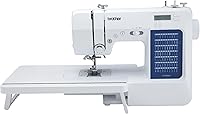
The CS7000X suits someone who wants to make garments now and work on quilts too. Its computerized controls include an LCD display, while its included support surface helps with larger pieces.
Its stitch menu includes 7 one-step auto-size buttonhole styles, which adds choice for garment projects. A quilt guide and protective hard case are also included.
Choose it when quilting is a real plan, rather than a vague possibility. You'll have more use for the workspace and accessory bundle if larger fabric pieces are part of your routine.
Skip it if you mainly mend clothes and prefer a smaller set of controls and attachments. The extension surface still needs room on your sewing table.
Singer 4423: for regular denim and canvas work
The Singer 4423 suits someone who regularly sews denser fabrics and wants control over how the foot holds them. Its manual tension dial also lets you adjust stitch balance as fabric and thread needs change.
It provides 23 stitches with 97 stitch applications, plus a one-step buttonhole. Applications describe ways to use stitches, so don't compare that number directly with another machine's built-in stitch count.
Its maximum speed is 1,100 stitches per minute, but careful feeding matters more at thick seams. The transparent bobbin cover lets you watch the remaining thread supply.
Choose it for frequent denim or canvas projects that fit a home machine's limits. Skip it if carrying weight is a priority: at 17.1 pounds, it's heavier than the other machines here.
Brother XM3700: for varied everyday sewing
The XM3700 suits someone interested in garment construction, decorative work and small clothing projects. It offers another everyday option when its particular stitch selection matches what you want to make.
The accessory compartment slides off to expose the free arm, and the machine has a built-in LED light. Its automatic threader and top drop-in bobbin support routine setup.
At 12.5 pounds, it's a useful candidate if you move between storage and a sewing table often. The included feet cover general seams, zippers, blind stitching, buttonholes and button sewing.
Choose it for its stitch selection and everyday task coverage. Skip it if your main reason for buying is a quilting table and larger workspace, or if the XM2701 already covers every stitch you need.
For more options beyond these examples, use our sewing machine buying guide.
What should you check before placing an order?
Confirm the exact machine, accessories and support arrangements before buying. Similar model names and bundles can make it easy to compare different packages without noticing.
Use this final checklist:
- Match the machine to your 3 planned projects and hardest regular seam.
- Confirm the stitches, adjustments and feet those jobs require.
- Measure the sewing surface and storage space.
- Check the machine's weight if you'll carry it often.
- Read the setup and care sections of its manual.
- Confirm power requirements, return terms and access to service.
- Leave room in your budget for fabric-specific needles and other supplies.
If you're replacing a machine, name the problem the new one must solve. More stitch choices won't fix a lack of quilt space, and a wider table won't replace better control over difficult layers.
Our best sewing machines guide gives you another starting point once you have that short list of requirements.
How should you set up a new sewing machine?
Start with the manual and a scrap of your project fabric before sewing the finished piece. A short practice seam lets you check threading, stitch choice and fabric feeding without risking a cut garment panel.
Place the machine on a stable surface and install the needle specified for your fabric. With power off, make sure the needle is fully inserted and facing the direction shown in the instructions.
Wind and insert the correct bobbin, then thread the upper path with the presser foot raised as directed. Lower the foot before sewing so the fabric and upper thread are controlled correctly.
Use scraps with the same number of layers as the real seam. Check both sides for loose loops, puckering and skipped stitches before changing one setting at a time.
Practice stopping, pivoting and reversing before starting a long seam. Guide the fabric gently and let the feed dogs move it instead of pulling from behind the needle.
How do you care for the machine and avoid common mistakes?
Keep lint out of the bobbin area, use sound needles and follow the machine's care instructions. Small setup problems can affect stitch formation on any home machine.
Brush away lint as the manual directs, and avoid blowing it farther into the mechanism. Oil only the points the manual specifies, using the recommended lubricant.
Replace a bent, blunt or damaged needle promptly. A needle that worked for one fabric may be the wrong size or type for your next project.
Don't adjust tension first whenever a seam looks wrong. Rethread the upper path and bobbin, check the needle, and make sure the presser foot is lowered before changing settings.
If fabric stops feeding or thread bunches underneath, stop sewing and clear the cause. Our guide to why a sewing machine keeps jamming walks through the common checks.
Avoid forcing bulky seams under the foot or pulling fabric to help the motor. If the machine struggles, reassess the layers, needle and project instead of trying to sew faster.
How do you choose a sewing machine and make the final decision?
The final step in how to choose a sewing machine is to pick the model that solves your most frequent sewing job. Use your next 3 projects to decide which features deserve space in your sewing area.
Choose the XM2701 for repairs and first projects, or the XM3700 when its wider stitch selection has a clear use in your plans. Choose the CS7000X when quilting workspace matters, and the Singer 4423 when heavier fabrics are a regular part of your work.
If two machines still fit, compare the controls, carrying weight and accessories you'll actually use. For a closer comparison of the first-project options, start with our sewing machines for beginners guide.