How Much Does a Good Sewing Machine Cost?
How much is a good sewing machine? Start with a budget model for basic repairs, then spend more for workspace, fabric controls, or buttonhole features your projects need.
On this page (9 sections)
- How much is a good sewing machine for your projects?
- What features deserve more of your sewing budget?
- Does a budget sewing machine cover basic sewing?
- When does the Brother XM2701 make sense?
- Should you pay more for a heavy-duty sewing machine?
- What belongs in the total sewing setup budget?
- How should you set up and care for a new machine?
- Which buying mistakes waste the most money?
- How much should you spend on a good sewing machine?
A good sewing machine for basic repairs can come from the budget tier; regular quilting or thick-fabric work calls for more specific features. To decide how much a good sewing machine should cost you, match the machine to your next few projects.
Keep part of your budget for needles, thread, cutting tools, and fabric. Spending everything on the machine can leave you without the supplies needed to start sewing.
How much is a good sewing machine for your projects?
Spend enough to cover your regular work, with room for supplies and care. Compare machines that meet the same needs before setting your limit, since extra stitches and accessories don't help every buyer equally.
For occasional mending, start with basic stitch options and controls you understand. For garments, consider buttonholes and stitch adjustments; for quilts, prioritize room to support fabric.
Heavy fabric needs a separate check of fabric controls and project limits. A machine chosen for decorative stitches may solve none of the problems caused by bulky seams.
Write down 3 projects you expect to make soon, including their fabrics. Our sewing machines for home buying guide can help you match those projects to a machine type.
What features deserve more of your sewing budget?
Pay for features that save effort on work you repeat. A buttonhole shortcut matters to someone making shirts, while a larger work area matters more to someone joining quilt sections.
- Useful stitches: Straight and zigzag stitches cover many repairs, while stretch stitches matter for suitable knit projects.
- Stitch adjustments: Length and width controls let you change the stitch for the fabric and task.
- Buttonhole operation: One-step operation reduces the stages you manage compared with a four-step process.
- Fabric support: A table and room around the needle help you manage larger pieces without their weight pulling on the seam.
- Included feet: Count the feet you'll use, then check the cost and compatibility of any extras you need.
- Service access: Check local repair options and read the exact warranty terms before committing.
For denim, pay attention to folded hems and seam crossings rather than fabric thickness alone. Our guide to sewing machines for denim and jeans explains why those layers matter.
How much is a good sewing machine with computerized features?
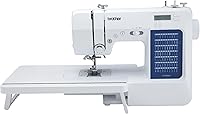
A computerized machine earns a larger share of your budget when its controls and project accessories have a clear use. The Brother CS7000X suits someone planning garments and quilting rather than only occasional repairs.
It has an LCD display, 70 built-in stitches, and 7 one-step auto-size buttonholes. Its wide table, larger needle-to-arm workspace, and 10 included feet make it worth comparing if larger projects are already on your list.
Choose it if you want to explore several kinds of sewing without selecting accessories one at a time. The included hard case is also useful when storing the machine or taking it to class.
Skip it if you want a small set of choices for quick fixes and have no plans for larger work. Read do you need a computerized sewing machine? before paying for options you may leave unused.
Does a budget sewing machine cover basic sewing?
A basic machine can cover mending and simple projects if its settings match the work. The Singer M1500 suits an occasional sewer who wants straightforward stitch selection.
Its 6 built-in stitches provide 57 stitch applications, with preset stitch length and width. Applications describe ways to use stitches, so don't compare that number directly with another machine's built-in stitch count.
The presets reduce decisions when starting a seam, but they also limit your ability to change the settings. Choose this approach if simplicity matters more than fine control.
Skip the M1500 if you expect to adjust stitch length and width often or make many buttonholes. Its four-step buttonhole requires you to manage each stage, which adds work across a row of shirt buttons.
For a first machine, compare the controls in our beginner sewing machine picks with the projects in your first pattern.
When does the Brother XM2701 make sense?
The Brother XM2701 suits everyday repairs and alterations when you want threading help and a useful range of feet. It bridges the gap between a very basic setup and a machine chosen for larger quilting work.
It includes 27 built-in stitches, an automatic needle threader, a drop-in top bobbin, and 6 sewing feet. Its free arm lets you position cuffs, sleeves, and pant legs around the sewing area.
Choose it for a mix of household sewing, garment repairs, and small projects. The included zipper and blind stitch feet are relevant to those jobs, rather than accessories you need only for decorative work.
Skip it if a wide quilting surface is your main reason for buying; compare the CS7000X instead. Brother also provides free technical support online, by live chat, or by phone for the life of the XM2701.
Should you pay more for a heavy-duty sewing machine?
Fabric controls deserve extra budget when thick layers are a regular part of your work. The Singer 4423 suits someone choosing a machine around denim, canvas, and bulky seam crossings.
It has adjustable presser foot pressure, extra-high presser foot lift, and a heavy-duty metal frame. Its 23 stitches provide 97 stitch applications, including a one-step buttonhole.
Choose it when managing fabric layers matters more than a broad decorative stitch menu. Adjustable pressure also gives you a way to change how firmly the foot holds the fabric.
Skip it if you mainly need occasional lightweight repairs and won't use those controls. Heavy-duty branding doesn't make every material or thickness suitable, so check project limits and use the correct needle.
Slow down at bulky crossings and never force fabric under the foot. For more context, see our guide to heavy-duty sewing machines.
What belongs in the total sewing setup budget?
Budget for a usable sewing station, not just the machine. A stable table, suitable chair, and room for fabric behind the needle can matter more than another decorative stitch.
Keep these supplies on your starting list:
- Needles suited to your fabric and replacement needles for later projects.
- Compatible bobbins and thread suited to the work.
- Fabric scissors, a measuring tape, pins or clips, and a seam ripper.
- An iron and a safe pressing surface for preparing seams.
- Any project-specific foot that isn't included.
Avoid buying a large accessory kit before you know what fits your machine. Bobbins and feet aren't universal, and an unused bundle isn't a saving.
Check power requirements too: the Brother XM2701 and CS7000X are intended for US use at 120 volts. Confirm compatibility before ordering either model for another country.
How should you set up and care for a new machine?
Start with correct threading and a scrap seam before sewing your project. Use scraps that match both the fabric and the number of layers in the final seam.
Read the manual's bobbin and upper-thread instructions in order. Raise the presser foot while threading the upper path so the thread can enter the tension system correctly.
Fit the right needle, select a suitable stitch, and sew slowly at first. Guide the fabric without pulling it, since pulling can bend the needle and distort the seam.
Unplug the machine before changing needles or cleaning around moving parts. Remove lint as the manual directs, and oil only where the instructions call for it.
If thread bunches underneath, rethread both paths before changing several settings. Our guide to why a sewing machine keeps jamming helps you work through the common causes.
Which buying mistakes waste the most money?
Buying for imagined projects is an easy way to overspend. Choose for work you have a realistic plan to do, rather than every craft you might try someday.
Don't use stitch count as a measure of fabric-handling ability. More decorative options don't help a needle cross a bulky jeans seam.
Also avoid choosing solely by brand or included accessory count. Read the manual for your exact model to see whether its threading, buttonhole process, and adjustments suit you.
Before replacing a machine that forms poor stitches, check the needle, threading, and fabric settings. Our sewing machine tension guide explains adjustments that may solve the problem without a new machine.
How much should you spend on a good sewing machine?
Choose the simplest machine that covers your planned projects, then compare the total setup cost. That's the most useful answer to how much a good sewing machine should cost for your needs.
Choose the Singer M1500 for occasional repairs with preset settings, or the Brother XM2701 for a broader mix of everyday sewing and alterations.
Choose the Brother CS7000X when quilting space and varied stitch choices have a clear role. Choose the Singer 4423 when fabric pressure and room under the foot matter for regular layered work.
Use how to choose a sewing machine to turn your next 3 projects into a short feature checklist. Compare only the machines that meet it, and keep enough budget to start sewing.
Frequently asked questions
How much should a beginner spend on a sewing machine?
Start in the budget tier for simple repairs, then move up only for features your first projects require. Keep room in your sewing budget for needles, thread, scissors, and fabric.
A machine with useful controls and clear instructions is a better starting point than one chosen mainly for decorative stitches.
Is an expensive sewing machine better?
An expensive machine is better value only when its added features help with your work. Quilt support, useful fabric adjustments, and a simpler buttonhole process can justify spending more.
A longer stitch menu adds little if you mainly mend clothing, so compare the tasks each machine makes easier.
Is a computerized sewing machine worth the extra cost?
A computerized machine can be worth more if its stitch selection and controls suit regular garment sewing or quilting. Basic repairs may need fewer options, so start with your projects rather than the machine type.
Our mechanical versus computerized sewing machine guide explains the differences to consider before choosing.
What should I check before buying a sewing machine?
Check stitch adjustments, buttonhole operation, workspace, included feet, and the fabrics you plan to sew. Read the manual to understand threading and care, and confirm electrical requirements before ordering.
Allow space around the machine for fabric support, then check accessory compatibility and access to service for your exact model.