Sewing Machine vs Serger: Which Do You Need? (October 2026)
In a sewing machine vs serger comparison, choose a sewing machine for repairs and garment construction or a serger for frequent edge finishing and stretch seams. Most people should buy a sewing machine first.
On this page (9 sections)
- Sewing machine vs serger: what does each one do?
- Can a serger replace your sewing machine?
- Which machine works better for clothes and knits?
- Which of these machines suits your projects?
- What should you check before buying either type?
- How should you set up a sewing machine or serger?
- What mistakes cause trouble with these machines?
- How do care and cleanup differ?
- Sewing machine vs serger: which should you buy first?
In the sewing machine vs serger choice, buy a sewing machine first for repairs, alterations and complete garment projects. Add a serger when finishing raw edges or sewing stretch seams becomes a frequent job.
A sewing machine forms common stitches with a needle thread and bobbin thread. A serger uses loopers to wrap multiple threads around an edge, usually while a blade trims excess fabric.
The deciding factor is where you need to sew. A sewing machine can stitch across a panel or beside a zipper; a serger mainly works along an edge.


Sewing machine vs serger: what does each one do?
A sewing machine handles construction and detail work, while a serger joins and finishes suitable fabric edges. Some seams can be sewn with either, but each machine leaves you with different options for the next step.
| Task | Regular sewing machine | Serger |
|---|---|---|
| Straight construction seams | Suitable for many projects | Suitable for some edge seams |
| Standard buttonholes and zipper installation | The machine to use | Does not replace these functions |
| Visible topstitching | Sews away from the raw edge | Mainly works along an edge |
| Controlling fraying | Uses zigzag or other seam finishes | Wraps thread around the edge |
| Stretch garment seams | Uses a suitable stretch stitch or zigzag | Uses an appropriate overlock setup |
| Quilt piecing | Makes straight seams with controlled allowances | Not the usual choice |
A regular machine also lets you baste a seam before committing to it. That helps when fitting clothing, matching a pattern or checking zipper placement.
A serger's wrapped edge can make the inside of clothing tidier, but appearance isn't its only purpose. On suitable seams, it combines work that would otherwise take separate sewing, trimming and finishing steps.
Can a serger replace your sewing machine?
A serger cannot cover the full range of everyday sewing tasks. Even a garment assembled mostly with overlock seams may still need a regular machine for closures, hems or visible details.
A common source of confusion is the double row of stitching on a store-bought T-shirt hem. That is often a coverstitch finish, which is different from the overlock work these sergers perform.
Don't buy either serger here expecting it to produce that finish as a standard function. A regular sewing machine may offer a suitable knit-hemming method, depending on its needle support and stitch options.
You also don't need a serger simply because woven fabric frays. Zigzag finishes, enclosed seams and binding are other ways to manage raw edges, chosen to suit the fabric and project.
If you're choosing your first machine, the home sewing machine buying guide explains the features that support a wider range of work.
Which machine works better for clothes and knits?
Use both machines for different garment steps when you sew clothes often. A regular machine handles closures and detail work, while a serger can speed up suitable seams and edge finishes.
For a woven skirt, you might sew and fit the main seams before finishing their allowances. For a knit top, an appropriate overlock stitch may join and finish the side seams in one pass.
Follow the pattern's construction order rather than serging every edge at the start. Some edges need to remain unfinished until a pocket, facing or closure is attached.
Should you use a sewing machine or serger for woven fabric?
Use a sewing machine for controlled construction seams and a serger when an overlocked edge suits the garment. If the seam needs to press open, finish each allowance separately rather than wrapping both together.
On sheer fabric, a bulky thread finish may show through or affect how the seam hangs. An enclosed seam can be a better choice, even when you own a serger.
How does differential feed help with knits?
Differential feed changes how fabric moves under the foot, helping you control stretching or puckering. Both sergers here have this feature, which is especially useful when fabric won't feed evenly.
If a knit edge comes out wavy, adjust the feed according to the manual and sew another scrap. Don't pull the fabric from behind, since that can stretch the seam further.
Use the same fabric, number of layers and sewing direction as the real seam. A setting that works across a stretchy knit may need adjustment when you sew in another direction.
Which of these machines suits your projects?
Choose the Brother XM2701 for broad sewing needs, then consider either serger for a specific finishing routine. Buy around the work you repeat, rather than the longest feature list.
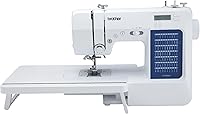
Brother XM2701: for repairs and varied projects
The XM2701 suits someone who wants to shorten pants, replace a zipper, make simple home items and learn garment construction. Its 27 built-in stitches include zigzag, stretch and blind hem options, plus an auto-size buttonhole.
The 6 included feet cover tasks such as zipper insertion and buttonholes. Its automatic needle threader reduces one setup step, while the drop-in top bobbin gives you a straightforward bobbin arrangement.
The free arm helps position cuffs, sleeves and pant legs, provided the opening fits around it. Small openings may still be easier to sew flat before closing the seam.
Skip it as your only solution if your main goal is trimming and overlocking long edges in one pass. For more detail on its everyday role, read our Brother XM2701 review.
Brother 1034D: for regular garment finishing
The 1034D suits someone who already has a regular machine and wants a dedicated place to finish garment seams. It supports 3- or 4-thread work, with overlock, narrow hem and rolled hem options.
Its color-coded guides and lower looper threading system help you follow the thread paths. Standard, gathering and blind stitch feet are included, giving you options beyond a basic edge finish.
Skip this model if you specifically need 2-thread work. Also skip a serger purchase for now if your projects mostly involve patching, zipper repairs or sewing away from an edge.
Singer S0100: for hems and decorative edges
The S0100 suits someone planning a mix of knit seams, narrow napkin hems and decorative fleece edges. Its 2-, 3- and 4-thread choices provide more thread combinations than the Brother serger here.
It arrives pre-threaded and has color-coded threading guides, so you can study the paths before replacing thread. Its built-in free arm also helps position small sleeves and cuffs.
Skip it if those extra thread combinations serve no planned project. A pre-threaded arrival is helpful at the start, but you'll still need to learn complete rethreading after a break or setup change.
Both sergers reach up to 1,300 stitches per minute. Start slowly, since guiding an edge accurately matters more than reaching maximum speed.
What should you check before buying either type?
Check project needs, workspace and ongoing supplies before choosing a machine. A serger needs room for several thread spools and creates fabric trimmings that need regular cleanup.
Write down your next 3 projects and the steps each requires. Buttonholes, patching and zipper work point toward a regular machine; repeated overlocked edges point toward adding a serger.
Allow space behind the machine for fabric to move without dragging off the table. If you'll store it between sessions, consider how often you'll realistically unpack and rethread it.
Serger thread, replacement needles and eventual blade care add to upkeep. A regular machine needs supplies too, but adding a second machine means maintaining a second setup.
The Brother XM2701 and 1034D are intended for US use at 120 volts. Confirm electrical compatibility before ordering for another country.
For a closer look at useful feet and stitches, use our guide to choosing a sewing machine by stitches, motor and feet. If electronic controls are part of your decision, compare mechanical vs computerized sewing machines.
How should you set up a sewing machine or serger?
Follow the threading order in the manual and practice on matching scraps before sewing the project. Correct setup matters more than adding more tension whenever a stitch looks wrong.
For a regular machine, choose a needle suited to the fabric and the machine's requirements. Thread the upper path with the presser foot raised, then insert the bobbin in the specified direction.
Start with the stitch recommended for your task. Check that the seam lies flat and holds when gently pulled, particularly on fabric that needs to stretch.
For a serger, identify the needle threads and looper threads before starting. Follow the required sequence, since an incorrectly threaded looper can prevent a proper stitch from forming.
Use different thread colors while learning if the manual allows it. This makes it easier to see which thread forms each part of the stitch and which tension control affects it.
Choose thread count by the seam's job, not by assuming more threads always means better results. A common 4-thread overlock setup suits many garment seams, while other configurations serve edge finishing or lighter hems.
Set the seam guide before feeding fabric toward the blade. Sew a scrap first and check how much fabric is removed, since the cut edge cannot be put back.
What mistakes cause trouble with these machines?
The biggest mistakes are using the wrong stitch, pulling the fabric and cutting away too much allowance. Slow down at unfamiliar steps and change one setting at a time.
Finishing a seam before checking the fit
Fit the garment before trimming away allowance you may need for adjustment. Basting on a regular machine gives you room to change the seam without first removing dense overlock stitches.
Treating an edge finish as every kind of seam
A stitch that wraps a raw edge isn't automatically the right construction stitch for that garment. Follow the pattern and manual when choosing whether to sew the main seam separately.
Pulling fabric through the machine
Let the feed system move the fabric while you guide its direction. Pulling can distort knits, bend a needle or make stitch length uneven.
Leaving pins in the blade's path
Remove pins before they reach the serger foot and blade. Keep fingers clear, and stop the machine before repositioning a difficult section.
Using tension to compensate for poor threading
Rethread according to the manual before making large tension changes. If regular-machine seams still look uneven, our guide to sewing machine tension problems helps you narrow the cause.
How do care and cleanup differ?
Both machines need lint removal and correct needle care, but a serger also collects waste from trimming fabric. Clean more often when a project produces heavy lint or lots of cuttings.
Disconnect power before opening covers or cleaning around needles and blades. Use the brush and cleaning method recommended in the manual, and oil only the points it identifies.
Check the needle after a strike, skipped stitches or an unexpected change in seam quality. Replace a damaged needle with the specified type rather than trying to straighten it.
A serger blade that no longer cuts cleanly needs attention according to the manual. Don't force fabric through a poor cut or adjust blade alignment without the correct instructions.
Cover either machine when stored, and keep its manual nearby. For projects centered on shortening clothing, our sewing machine hemming guide explains why access around the hem and the required finish matter.
Sewing machine vs serger: which should you buy first?
Choose the XM2701 for varied repairs and construction, the 1034D for routine garment finishing, or the S0100 when varied thread combinations match planned hems and decorative edges. If you have neither type, the regular sewing machine fills more gaps first.
Keep your current machine if it already handles your work and edge finishing is only occasional. Add a serger when repeated finishing steps, rather than missing basic sewing skills or suitable needles, are slowing your projects.
Before settling the sewing machine vs serger decision, mark the seams and finishes on your next pattern. Use the sewing machine feature guide to connect those jobs to the stitches and feet you'll actually use.
Frequently asked questions
Can a serger replace a sewing machine?
A serger usually can't replace a sewing machine because it works mainly along fabric edges. You'll still need a regular machine for standard buttonholes, zipper installation, topstitching and many repairs.
Buy a serger as an addition when overlocked seams become a regular part of your projects.
Do you need a serger to sew clothes?
No, a regular sewing machine can make both woven and knit clothes with suitable needles, stitches and seam finishes. A serger saves steps on suitable seams by joining, trimming and wrapping the edge together.
Add one when repeated edge finishing takes enough time to justify another machine.
Is a serger good for beginners?
A beginner can learn a serger, but a regular sewing machine is the better first choice for learning varied construction tasks. A serger adds several thread paths, loopers and a cutting blade to manage.
Learn its threading order and practice guiding scraps before working on a garment.
Can you use a serger on woven fabric?
Yes, a serger can wrap woven fabric edges to help control fraying. You can finish seam allowances separately when they need to press open, or together when the pattern allows.
Keep the intended seam allowance clear of the blade, and practice with matching fabric layers before sewing.
Should you buy a sewing machine or serger first?
Buy a sewing machine first for repairs, alterations and complete garment projects. Buy a serger first only if you already have reliable access to a regular machine and need faster edge finishing or stretch seams.
Your next few projects are a better guide than the number of stitch options.