6 Best Sewing Machines for Hemming (October 2026)
The best sewing machines for hemming include the Brother XM2701 for everyday clothing hems, the Brother XM3700 for learning garment sewing, and the Brother CS5055 for larger fabric projects.
On this page (9 sections)
- Which sewing machines for hemming fit different jobs?
- How do you choose a sewing machine for hemming?
- Which hem should you use for pants, shirts and curtains?
- How do you set up an even hem before sewing?
- How do you sew blind hems and narrow hems neatly?
- Can a home sewing machine hem jeans?
- Which hemming mistakes should you avoid?
- How should you care for a machine used for alterations?
- Which sewing machine for hemming should you choose?
The Brother XM2701 is the best sewing machine for hemming most clothes because its included feet cover both blind hems and narrow folded edges. Choose the GX37 if you also want more decorative stitch choices, or the CS5055 if wider fabric projects shape your buying decision.
Your usual garment matters more than the largest stitch count. Dress trousers need a subtle finish, stretchy T-shirts need a hem that gives, and curtains need careful measuring plus support for long fabric.
For a broader overview, start with our complete sewing machine buying guide. Our guide to choosing a sewing machine explains which controls and accessories matter across different projects.
Our picks at a glance
-
1

-
2

-
3
Which sewing machines for hemming fit different jobs?
The XM2701 covers the widest mix of ordinary clothing hems with its included accessories. The other picks make sense when you value garment sewing options, computerized controls, preset settings or manual stitch adjustment.
We compared each machine's hemming features, included feet and fit for home alterations. A larger stitch menu earns attention only when it supports work you actually plan to do.
Brother XM2701
- Blind hem stitch
- Blind stitch and narrow hemmer feet
- Free arm
- Automatic needle threader
The XM2701 covers subtle trouser hems and narrow folded edges with its included hemming feet. Its free arm also helps you position pant legs and sleeves.
Pros
- Both hemming feet included
- Free arm for pant legs and sleeves
- Automatic needle threader
Cons
- Extra decorative stitches favor the GX37
- Intended for US use at 120 volts
The XM2701 suits someone shortening work pants, adjusting sleeves and finishing lightweight woven edges. Its blind stitch and narrow hemmer feet let you learn 2 different finishes without first shopping for those accessories.
Use blind hemming when you want a discreet trouser or skirt edge. Use the narrow hemmer for suitable lightweight fabric where a small folded edge looks better than a deep hem.
The free arm helps position garment openings, although a very small cuff may still need another approach. Its automatic needle threader and drop-in top bobbin also reduce the number of setup steps you handle by hand.
Its 27 built-in stitches include zigzag and stretch stitches, useful when your repair pile includes more than woven trousers. Choose the stitch for the fabric instead of using a straight stitch on every garment.
Skip it if computerized controls or a larger needle-to-arm workspace are your main priorities. For a first machine, compare the learning features in our best sewing machines for beginners guide.
Brother XM3700
- Blind stitch foot included
- Free arm
- 37 built-in stitches
- Automatic needle threader
The XM3700 suits beginners who want to move from clothing alterations into garment construction. Its blind stitch foot and free arm cover useful hemming tasks.
Pros
- Blind stitch foot included
- Free arm for cuffs and sleeves
- Built-in accessory storage
Cons
- No narrow hem foot in the included set
- Intended for US use at 120 volts
The XM3700 fits beginners who want to learn garment sewing alongside hemming. Its 37 built-in stitches provide room for decorative work and other clothing projects, while the included blind stitch foot supports a useful alteration technique.
The removable accessory compartment converts the bed to a free arm. Keeping small accessories together also helps when you pack the machine away between sewing sessions.
An automatic needle threader, drop-in top bobbin and LED work light support routine setup. The light helps you see the sewing area, but good room lighting still matters when matching dark thread to dark fabric.
The main buying tradeoff is its accessory set: the 5 included feet do not include a narrow hem foot. Pick the XM2701 or GX37 if rolled narrow edges are already on your project list.
Skip this model if extra stitch choices would go unused. If control styles are your bigger concern, read what a computerized sewing machine is before choosing.
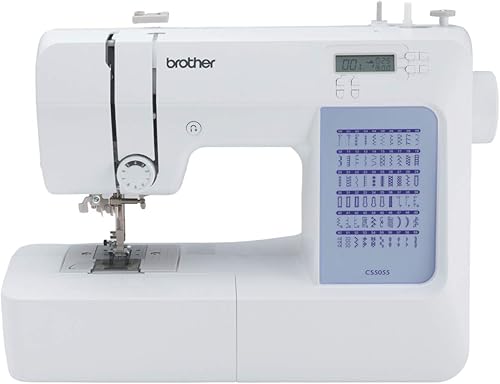
Brother CS5055
- LCD display
- 7 sewing feet
- Larger needle-to-arm workspace
- Fixed needle bar
The CS5055 suits buyers who hem wider fabric and also want computerized stitch selection. Plan table support for long curtains, since workspace beside the needle cannot support their full weight.
Pros
- LCD stitch display
- Larger needle-to-arm workspace
- Utility and decorative stitch choices
Cons
- Confirm feet for your preferred hem method
- Intended for US use at 120 volts
The CS5055 suits buyers whose hemming projects sit within a broader sewing workload. Its larger needle-to-arm workspace gives you more room to arrange fabric, especially when a project becomes bulky beside the needle.
That space can help with garment panels and curtains, but it does not hold up a long curtain by itself. Keep the remaining fabric supported on the table so its weight cannot drag the hem sideways.
The computerized controls include an LCD display, 60 built-in stitches and 7 styles of one-step buttonholes. Those choices make more sense for sewing clothes and decorative projects than for shortening a few pairs of pants.
Brother says the fixed needle bar helps produce cleaner stitching and even lines. Fabric preparation and steady feeding still determine whether your folded edge stays aligned.
Choose it for workspace and computerized stitch selection. Skip it if included hemming accessories are your deciding factor; confirm the exact feet needed for your method, and read our Brother CS5055 review for a closer comparison.
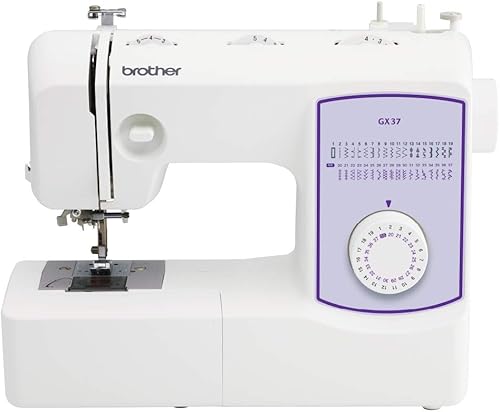
Brother GX37
- Narrow hem foot included
- Blind stitch foot included
- Free arm
- Dial stitch selection
The GX37 pairs both hemming feet with utility and decorative stitches selected by dial. Choose it when clothing alterations share space with applique and decorative sewing.
Pros
- Both hemming feet included
- Stitches printed on the machine
- Free arm for garment openings
Cons
- Extra stitches add little to plain hems
- Intended for US use at 120 volts
The GX37 suits someone who wants to combine clothing alterations with decorative sewing. It includes both a blind stitch foot and a narrow hem foot, plus utility and decorative stitches selected by turning a dial.
The stitch choices are printed on the machine, which gives you a visible reference while learning. Its 37 built-in stitches offer more variety than the XM2701, though that difference matters little for a plain trouser hem.
The free arm helps with garment openings, and the automatic needle threader handles a common setup task. Its included soft dust cover is useful when the machine stays on a desk between projects.
Choose this model when you want the hemming accessory mix and expect to use decorative stitches. Skip it if you only need straightforward repairs, since extra stitch patterns will not improve a badly measured fold.
Our sewing machine buying guide compares the other features worth weighing before you settle on a general-purpose machine.
Singer M1500

- Blind hem stitch
- Preset stitch length and width
- Stitch selector dial
- Marked threading guides
The M1500 suits occasional mending when you prefer preset stitch settings. Buyers who want to fine-tune stitch length and width should choose another model.
Pros
- Straightforward dial selection
- Preset stitch settings
- Threading guides marked on the machine
Cons
- No blind hem or narrow hem foot included
- Limited control over stitch length and width
The Singer M1500 suits occasional mending when you want fewer stitch-setting decisions. Select a stitch with the dial, then work with its preset length and width.
That approach can help a beginner focus on pressing, guiding and maintaining a consistent seam allowance. The tradeoff appears when a particular fabric or hem needs a setting you cannot fine-tune.
It has 6 built-in stitches, including straight, zigzag and blind hem stitches. The 57 stitch applications describe uses of those stitches, rather than 57 separate stitch patterns.
The included all-purpose, zipper and buttonhole feet cover basic tasks, but there is no dedicated blind hem or narrow hem foot in that set. Many folded hems can still be sewn with the all-purpose foot.
Pick it for simple woven hems and occasional repairs where preset settings suit your work. Skip it if you expect frequent fabric changes, precise stitch adjustments or an included set of specialist hemming feet.
Janome Arctic Crystal

- Blind hem foot included
- Adjustable stitch width and length
- Free arm
- 15 built-in stitches
The Arctic Crystal offers adjustable stitch settings for buyers who want to refine basic garment repairs. Its blind hem foot and free arm suit routine clothing work.
Pros
- Adjustable stitch width and length
- Blind hem foot included
- Extra-high presser foot lift
Cons
- No narrow hem foot in the included set
- Fewer decorative choices than the Brother models
The Janome Arctic Crystal suits buyers who want adjustable stitch length and width without a large stitch menu. Those controls let you refine a seam for the fabric and finish instead of accepting one preset combination.
Its 15 built-in stitches and 4 included feet keep the choices focused. The blind hem foot helps guide folded fabric, while the free arm gives access to suitable pant legs and sleeves.
An extra-high presser foot lift helps with positioning fabric beneath the foot. It does not establish how much thickness the needle and feed system can sew, so avoid treating clearance as proof of heavy-fabric capacity.
Choose it for routine repairs when you value setting control more than decorative variety. Skip it if an included narrow hem foot is essential, since its accessory set does not include one.
For thick trouser seams, compare the demands in our guide to sewing machines for denim and jeans before choosing a standard home machine.
How do you choose a sewing machine for hemming?
Choose by fabric, hem finish and access to the seam, then compare controls and accessories. A machine with the right foot for your usual job can be more useful than one with many stitch patterns.
Match your hemming machine to the finish
A visible folded hem usually needs a straight stitch on stable woven fabric. A blind hem needs the correct stitch and fold, while a narrow rolled edge benefits from a suitable hemming foot.
Stretch fabric changes the decision because the finished seam must give with the garment. Look at the available stretch or zigzag options and the manual's guidance before buying for frequent knit alterations.
Do not confuse a narrow hem foot with a blind hem foot. The first forms a small folded edge, while the second guides a fold so the stitch catches only a small amount of the garment.
Check access before counting stitches
A free arm is useful only when the garment opening fits around it. Tiny sleeves and narrow children's cuffs may be easier to sew from inside the opening, keeping the opposite layer clear.
For curtains and other flat pieces, table support matters more than a free arm. Measure your sewing area with the fabric spread out, including space behind the machine for the sewn portion.
Choose how much control you want
Preset settings reduce choices, but adjustable settings give you more ways to correct the seam's appearance. That flexibility matters when you move between fine woven fabric, heavier cloth and stretch garments.
A screen alone does not make hemming easier. Choose a control layout you can understand, then check that the machine supports your preferred stitch and compatible foot.
The Brother models here are intended for US use at 120 volts. Check local electrical requirements before choosing a machine for use elsewhere.
Which hem should you use for pants, shirts and curtains?
Use a finish that matches the garment's fabric and original style. Copying the existing hem is often a useful starting point, provided the new length leaves enough fabric for the fold.
Woven pants and skirts
A straight, double-fold hem encloses the raw edge and leaves a visible stitching line. It is a practical choice for casual woven garments where topstitching suits the style.
Dress trousers and some skirts benefit from a blind hem. The fold and stitch position must work together, or the outside catches will be larger than you want.
T-shirts and other knits
Knit hems need room to stretch without breaking the thread. A suitable zigzag or stretch stitch can help, but practice with the same folded layers to check both stretch and appearance.
A twin needle is another option on compatible machines with the correct setup. It does not turn a general sewing machine into a coverstitch machine, so follow the manual before choosing this method.
Lightweight edges and curtains
A narrow rolled hem suits some light woven edges, but a narrow hem foot takes practice to load and guide. It is less forgiving when the edge frays heavily or crosses a bulky seam.
Curtains often suit a deeper pressed hem that adds structure at the bottom. Check the fabric's care directions and let it settle before marking, since washing or hanging can change the length.
How do you set up an even hem before sewing?
Mark the finished edge before cutting, then leave enough fabric for the hem allowance. Measuring and pressing do more for an even result than adding another row of stitches later.
- Prepare the garment. Wash and dry it as its care directions allow, then remove wrinkles before measuring.
- Mark the finished length. For pants, wear the intended shoes and check both legs rather than assuming they need the same adjustment.
- Mark the cutting line separately. Leave fabric beyond the finished edge for your chosen fold and raw-edge finish.
- Press and secure the fold. Use heat suited to the material, then pin, clip or baste where needed.
- Sew a practice seam. Use matching scraps with the same needle, thread, stitch and number of folded layers.
If you have no matching scrap, use an offcut only after confirming the length. Check stitch appearance and feeding before committing to the visible part of the garment.
Thread the machine with the presser foot raised, following its threading path. Use the correct bobbin type and check that it sits and unwinds as the manual directs.
Choose a needle for the fabric, such as a denim needle for suitable denim work or a stretch needle for fabrics that need one. Replace a damaged needle rather than trying to correct every poor stitch with tension changes.
How do you sew blind hems and narrow hems neatly?
For a neat blind hem, let the needle catch only a small amount of the garment fold. For a narrow hem, feed a consistent amount of fabric into the foot so the fold stays even.
Follow the manual's folding diagram for blind hemming. The sewing fold differs from the finished hem fold, and guessing at it can put too much stitching on the outside.
Guide the folded ridge against the foot's guide, then turn the handwheel through the first stitches as instructed. Check the right side before sewing the full opening.
For a narrow hem foot, start with a clean, even edge and form the first small fold carefully. Sewing a short starting section before feeding the fold into the foot can help with control.
Slow down near side seams, where extra thickness can interrupt the rolled edge. Stop and reposition if the fold escapes instead of pulling the fabric to force it back into place.
On curved hems, a deep fold may bunch because the folded edge and garment have different lengths. A narrower finish or a pattern-specific method can fit that curve better.
Can a home sewing machine hem jeans?
A home sewing machine can hem some jeans, but the thick intersections at side seams are the main challenge. Choose based on the folded seam thickness rather than the word “denim” alone.
Brother says the CS5055 can sew denim and tweed. That claim does not define a maximum stack of denim layers, so check the actual hem and follow the machine's instructions.
Use a suitable needle and avoid starting with the presser foot tilted sharply over a thick seam. A compatible leveling aid can help keep the foot level as it crosses the raised area.
Sew slowly and stop if the needle deflects, the motor struggles or the fabric stops feeding. Never pull the garment through or force a seam beneath the foot.
Our guide to sewing denim and jeans at home explains the fabric limits in more detail. If the needle misses stitches, check our guide to sewing machine skipping stitches.
Which hemming mistakes should you avoid?
Avoid pulling the fabric, cutting too early and sewing over pins. These mistakes can distort the hem, remove your chance to correct the length or damage the needle.
Support the garment's weight and let the feed dogs move the fabric. Pulling a knit edge can leave waves, while a hanging curtain panel can drag an otherwise straight seam off line.
Check that only the intended layers are under the foot when sewing a tube. It is easy to catch the opposite side of a sleeve or pant leg and sew the opening closed.
Do not keep increasing tension to solve every loop or uneven stitch. Rethread first, check the bobbin and needle, then use our guide to sewing machine tension problems if the seam still needs correction.
Avoid trimming the hem allowance until the length is settled. Leaving room for a correction is especially useful on a first alteration or a garment that hangs unevenly.
How should you care for a machine used for alterations?
Remove lint and follow the manual's care schedule, especially after sewing fabrics that shed fibers. A clean feeding area helps keep small scraps and thread tails from interfering with the next job.
Switch off and unplug the machine before cleaning or changing a needle. Brush accessible lint away as instructed, and avoid blowing it deeper into the machine.
Oil only where the manual directs. Adding oil to an unspecified area can create a new problem rather than solve a stiff or noisy mechanism.
Keep needles, bobbins and feet labeled so you can return to a known setup. Cover the machine between sessions, and inspect the needle before starting an important alteration.
Which sewing machine for hemming should you choose?
Choose the XM2701 for a varied household repair pile, especially when blind hems and narrow edges both matter. Choose the GX37 when you want that accessory mix alongside more decorative sewing choices.
Pick the XM3700 for learning garment construction, or the CS5055 when computerized controls and workspace shape your projects. Choose the M1500 for occasional preset-setting simplicity, and the Arctic Crystal for adjustable settings on basic repairs.
Before ordering a sewing machine for hemming, name your first 3 projects and match each to a stitch, foot and fabric need. Our best sewing machines roundup helps if those projects extend well beyond alterations.
Our top 3 picks at a glance
-
1
-
2
-
3
Frequently asked questions
What stitch should I use to hem pants?
Use a straight stitch for a visible hem on woven pants, or a blind hem stitch for a subtler finish on dress trousers. Stretch pants need a stitch that can move with the fabric.
Try the chosen stitch on matching scraps with the same folds before sewing.
Do I need a special foot to sew a hem?
A regular presser foot can sew many pressed, folded hems. A blind hem foot helps guide the folded fabric for small catches, while a narrow hem foot rolls a small edge as you sew.
Choose accessories for the finish you want rather than buying a foot for every repair.
Can a beginner hem clothes with a sewing machine?
Yes, a beginner can start with a straight hem on stable woven fabric. Mark the finished length, leave enough fabric for the fold, press it and practice on matching scraps.
Sew slowly without pulling the garment, then check both sides before trimming thread tails or making another pass.
Is a blind hem stitch invisible?
A blind hem stitch leaves small catches on the garment's outside, so it is not completely invisible. Matching thread, careful folding and a small bite into the garment help reduce their appearance.
Check a practice seam from the right side before deciding that the stitch position is correct.
Can these machines make the same hem as a coverstitch machine?
These are general sewing machines, so do not buy one expecting a dedicated coverstitch finish. A suitable twin needle can make parallel lines on compatible machines, but the underside differs from coverstitch.
Check the manual for needle, foot and stitch limits before trying that method on a knit garment.