7 Best Computerized Sewing Machines (October 2026)
The best computerized sewing machines include the Brother CS7000X for most home sewing, the Brother XR9550 for creative garment makers, and the Brother CS5055 for everyday clothing repairs.
On this page (6 sections)
- Which is the best computerized sewing machine for your projects?
- How should you choose a computerized sewing machine?
- How do you set up a computerized machine for the first project?
- Which mistakes cause trouble with computerized sewing machines?
- How should you care for a computerized sewing machine?
- Which computerized sewing machine should you choose now?
The Brother CS7000X is the best computerized sewing machine for most home sewers because its accessories support clothing, household projects and a first step into quilting. Choose the Brother XR9550 if stitched lettering is a priority, or the Singer 6700C if thick fabrics dominate your plans.
Start with the next 3 projects you expect to sew. Their fabric, seams and finishing steps tell you more about the right machine than a large stitch total.
For background on electronic controls, read what a computerized sewing machine is and whether you need a computerized model.
Our picks at a glance
-
1
-
2

-
3
Which is the best computerized sewing machine for your projects?
The CS7000X is the strongest general-purpose choice, while the other picks suit more specific sewing plans. KnackAndKnow compared their stitch functions, controls and accessories, giving more weight to useful home sewing tools than to the largest feature count.
A machine for occasional repairs needs a different package from one used for quilt piecing and decorative clothing. Read each recommendation with your usual work in mind, including the projects you can realistically see yourself starting.
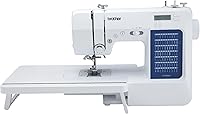
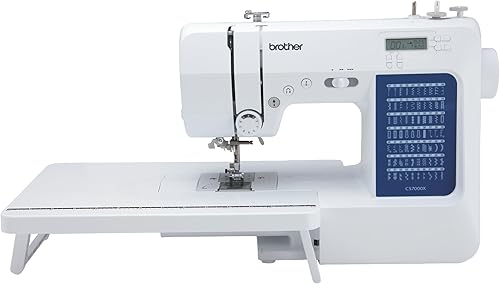
Brother CS7000X
- 70 built-in stitches
- 7 one-step buttonholes
- 10 sewing feet
- Wide table and hard case
A useful starting point for clothing, household projects and quilting. Its table, quilt guide and protective case make the package practical for a sewing area that handles several kinds of work.
Pros
- Table supports larger projects
- Automatic needle threader and drop-in bobbin
- Hard protective case included
Cons
- No built-in lettering among its stated stitch functions
- US model intended for 120-volt use
Choose the Brother CS7000X if you want one machine for everyday sewing with room to learn quilting. Its 70 built-in stitches cover utility, decorative, heirloom and quilting functions, with 7 one-step auto-size buttonholes for closures.
The wide table supports fabric outside the machine, while the larger needle-to-arm workspace gives you room to arrange a project. These serve different purposes: fabric support matters, but it doesn't remove the need to roll or fold a quilt.
The package includes 10 sewing feet, a quilt guide and a hard protective case. The automatic needle threader and drop-in top bobbin help with routine setup, and an LCD handles stitch selection.
Its metal frame and fixed needle bar are useful construction details, but they aren't reasons to force thick stacks under the foot. Skip it if built-in lettering is essential, or if your main work needs a machine chosen specifically for heavy materials.
Brother XR9550
- 165 built-in stitches
- 55 alphanumeric stitches
- 8 sewing and quilting feet
- Wide table and hard case
A good match for clothing projects that mix construction, decorative stitching and simple lettering. Its free arm also helps you position cuffs and sleeves.
Pros
- Built-in lettering options
- Drop feed for free-motion quilting
- Hard cover included
Cons
- Smaller foot bundle than several alternatives
- Protective foam must stay inside the hard cover
Choose the Brother XR9550 for clothing and creative projects that use both decorative stitches and simple lettering. Its 165 built-in stitches include 55 alphanumeric options, giving you a way to add stitched names or initials without moving to a separate embroidery task.
The free arm helps you position tubular items such as cuffs and sleeves. Use it when the opening fits comfortably around the arm, rather than stretching the fabric to make it fit.
A wide table, 8 sewing and quilting feet, automatic needle threader and drop-in bobbin round out the package. Drop feed also allows free-motion quilting, where you guide the fabric to form the pattern.
Skip it if lettering and decorative work aren't on your project list. For repairs and plain seams, those extra choices add little; if you choose it, leave the Styrofoam lining inside its hard cover as Brother instructs.
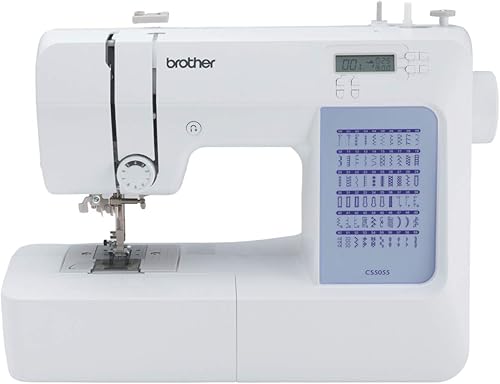
Brother CS5055
- 60 built-in stitches
- 7 one-step buttonholes
- 7 included sewing feet
- Fixed needle bar
A focused choice for repairs, garment construction and occasional decorative work. It includes an LCD, threading aids and an LED-lit work area without centering the package on quilting accessories.
Pros
- Utility and decorative stitch selection
- Automatic needle threader
- Metal frame and fixed needle bar
Cons
- Wide table is not part of the supplied accessory bundle
- US model intended for 120-volt use
Choose the Brother CS5055 if your sewing centers on repairs, simple garments and occasional decorative details. Its 60 built-in stitches and 7 one-step buttonholes cover a useful range without making a large stitch library the main attraction.
The LCD, automatic needle threader and drop-in bobbin support daily setup. An LED-lit work area helps you see the needle area, although good room lighting still matters when matching dark thread to dark fabric.
You get 7 sewing feet and 4 bobbins, plus a metal frame and fixed needle bar. Brother describes the feed system as suitable for denim and tweed, but bulky seam crossings still call for careful handling and an appropriate needle.
Skip it if quilting is your immediate goal and you want a support table in the box. The CS7000X makes more sense for that plan, while this model fits someone whose first projects are hems, clothing alterations and small household items.
Brother HC1850

- 185 built-in stitches
- 55 alphanumeric stitches
- 8 included feet
- Wide table
Choose this for a regular mix of quilting, decorative sewing and basic stitched lettering. Adjustable speed and a stitch reference chart help you work through different techniques.
Pros
- Free-motion quilting capability
- Spring-action quilting foot included
- Adjustable sewing speed
Cons
- Extra stitch functions add little for repair-only use
- Intended for 120-volt AC use
Choose the Brother HC1850 when quilting and basic stitched lettering will both get regular use. Its 185 built-in stitches include 55 alphanumeric stitches, so the package fits personalized quilt projects as well as decorative sewing.
Adjustable sewing speed helps you keep a steady pace while learning a technique. The stitch reference flip-chart is also useful when you want to compare patterns without remembering their selection numbers.
The wide table, 8 included feet and spring-action quilting foot support its quilting focus. Free-motion capability lets you guide the design yourself, but smooth curves and even stitch length still depend on practice.
Skip it if most of your work is plain construction or repairs. A larger stitch menu won't make those jobs easier, and basic sewing lettering should not be confused with the larger designs and positioning tools of a dedicated embroidery machine.
Brother CP100X

- 100 built-in stitches
- 8 one-step buttonholes
- 10 feet plus quilt guide
- Wide table and hard case
Its walking, piecing and quilting feet suit a move from small sewn items into quilt projects. Adjustable speed lets you set a pace that matches the task.
Pros
- Walking and 1/4-inch piecing feet included
- Hard case and quilt guide included
- One-step automatic needle threader
Cons
- Cannot monogram despite the monogramming foot name
- US model intended for 120-volt use
Choose the Brother CP100X if you want to learn several quilting methods with suitable feet already included. Its 10-foot package contains a walking foot, 1/4-inch piecing foot and quilting foot, alongside tools for garment construction.
Those feet solve different problems. A piecing foot helps you follow a seam allowance, while a walking foot helps feed fabric layers together; neither replaces careful cutting, pressing or basting.
The machine has 100 built-in stitches, 8 auto-size buttonholes and adjustable sewing speed. A wide table, quilt guide and hard case make it a useful package for a sewing space that handles both quilts and clothing.
Skip it if monogramming is a requirement. The included monogramming foot is for decorative stitches, and the machine cannot monogram; choose it for its sewing and quilting tools rather than the name stamped on an accessory.
Brother CS7205

- Utility and decorative stitches
- 1 alphanumeric font
- 11 included sewing feet
- Wide table
A broad accessory package for sewists who move between clothing, quilting and decorative crafts. The included stitch guide foot adds another option for keeping seams aligned.
Pros
- Walking, piecing and stitch guide feet included
- Lettering font for basic monogramming
- Variable speed and drop feed dogs
Cons
- More accessories to learn and organize
- US model intended for 120-volt use
Choose the Brother CS7205 if your craft plans call for a wide range of sewing techniques. Its 11 included feet cover jobs such as piecing, walking-foot sewing, quilting and following a stitch guide.
That range makes sense for someone moving between small quilts, decorative household items and clothing. It adds less value if you expect to leave the standard foot attached for almost every project.
The machine includes a wide table, quilt guide, lettering font and stitch reference flip-chart. Variable speed control helps you limit the pace, while drop feed dogs provide another option for quilting work.
Skip it if you want a small set of tools to learn first. Organizing several unfamiliar feet takes attention, and each new stitch still needs the correct foot and settings; buy this package because you can name the techniques you'll use.
Singer 6700C

- 411 stitch applications
- Lettering font
- Adjustable speed control
- 10 included presser feet
Singer positions this model for denim, canvas and other heavy-duty home projects. Its speed control lets you limit the pace while working around bulky seams.
Pros
- Singer claims enhanced piercing power for thick fabrics
- Walking and blind hem feet included
- LCD shows stitch length and width settings
Cons
- 14.6 lb to lift between storage and sewing
- Singer provides a 1-year manufacturer warranty
Choose the Singer 6700C for frequent denim, canvas and other thick-fabric home projects. Singer says its motor provides enhanced piercing power, making that fabric focus the main reason to consider it.
Speed control lets you limit the sewing pace around bulky transitions. Slowing down gives you more time to guide the fabric, but it doesn't make every stack of material suitable for a home machine.
Its 411 stitch applications cover basic, stretch and decorative work, with a lettering font also available. Applications and individual built-in stitches are different measures, so don't rank it against the Brother models by that number.
The 10 included feet include walking and blind hem feet. Skip it if portability or mostly lightweight repairs drive your choice, and read what makes a sewing machine heavy duty before treating the label as a promise about every material.
How should you choose a computerized sewing machine?
Choose by fabric, required stitches and working space, then compare convenience features. A machine earns its place by helping you finish your normal projects, not by offering the longest menu.
Write down what you want to make, how often you'll sew and where the machine will stay. Use our sewing machine selection guide if you're still deciding which features deserve priority.
Which stitches make the best computerized sewing machine useful?
The useful stitches are the ones that finish your projects correctly. For many home sewers, a straight stitch, zigzag, suitable stretch stitch, buttonhole and edge-finishing options matter more than dozens of decorative patterns.
For garments, check the construction and finishing steps in your patterns. A button-front shirt needs dependable buttonhole setup, while a knit garment needs a stitch that can stretch with the seam.
Decorative stitches matter when you plan to use them on borders, pockets or household items. Make a labeled sample strip on spare fabric so you can judge the actual pattern and spacing before sewing the finished piece.
Should you pay attention to lettering?
Built-in lettering matters if you want small stitched names, initials or simple labels. Choose a model with an actual alphabet function, because a foot called “monogramming” does not create letters by itself.
Sewing-machine lettering also differs from dedicated embroidery. Check that the available style suits your plans rather than assuming you can create large motifs, import artwork or place a design automatically.
What makes a machine suitable for quilting?
Quilting calls for fabric support and the right method of feeding the layers. Piecing joins the fabric shapes, while quilting sews through the assembled top, batting and backing.
For straight-line quilting, a walking foot can help the layers travel together. Our guide to what a walking foot does explains where it helps and why it isn't the same as a free-motion foot.
For free-motion work, confirm the correct foot and feed-dog setup in the manual. Start with a small quilt sandwich so you can learn to coordinate hand movement and sewing speed before handling a full quilt.
Which controls deserve the most attention?
Prioritize controls that make your common tasks easier to repeat. A readable screen helps you check the selected stitch, while adjustable speed is useful when you want to limit how fast the machine can sew.
An automatic needle threader helps with one setup step, but you still need to follow the full upper-thread path correctly. A drop-in bobbin also needs the right bobbin type, direction and thread route.
If you prefer a few physical controls for plain seams, compare mechanical and computerized sewing machines. Electronic stitch selection is useful when you'll use it regularly.
How much room should you allow?
Allow space for the machine, the fabric and your hands. Measure the sewing surface with any extension table attached, and leave room behind the machine so the fabric can move without catching.
A large quilt hanging over an edge can pull against the seam. Support its weight on the table and keep scissors, pins and loose cords away from the fabric path.
If you put the machine away after each session, think about lifting and storage too. A cover protects it between uses, but it isn't a substitute for a secure grip when carrying it.
How do you set up a computerized machine for the first project?
Start with correct threading and a scrap seam before sewing the finished item. This checks the needle, thread, fabric and stitch settings together, which is more useful than changing controls at random after a problem appears.
Check power, placement and accessories
Use a firm, level surface and arrange the chair so you can see the needle area without leaning forward. Keep the pedal where your foot can reach it without twisting your leg.
The Brother models in this guide are intended for US 120-volt use. Follow their electrical and warranty guidance, especially if you're buying for use in another country.
Identify the standard foot, buttonhole foot and any specialty foot you'll use first. Keep the manual nearby so you can match each accessory to its instructions.
Fit the needle and thread the machine
Choose a needle type and size suited to the fabric, following the manual's guidance. Replace a bent or damaged needle before sewing, and install it in the correct direction with the clamp secure.
Raise the presser foot when threading the upper path so the thread can settle into the tension system. Use the specified bobbin and follow the diagram for its direction and thread path.
Bring the thread tails into the position the manual shows. Lower the presser foot before stitching, and guide the fabric without pushing or pulling it through.
Sew a sample that matches the real seam
Use scraps of the same fabric and the same number of layers as your project. For a hem, fold the sample as you will fold the garment, including any bulky seam crossing.
Check both sides for loose loops, puckering or uneven feeding. Rethread first if something looks wrong, then change one setting at a time so you can see what helped.
For buttonholes, use the intended button and the same fabric layers and stabilizer as the garment. Check the size and placement on the sample before cutting any opening.
Which mistakes cause trouble with computerized sewing machines?
The most common avoidable mistakes are wrong setup, poor fabric support and forcing the feed. More stitch choices don't correct those problems, so build a repeatable setup routine.
Choosing a stitch without checking the foot
Match the foot to the stitch and its width before you begin. Some specialty feet have limited openings, and a mismatched stitch can bring the needle into contact with the foot.
Follow the manual's clearance check after changing a foot or needle. Keep fingers away from the needle area while the machine has power.
Pulling fabric through a difficult seam
Let the feed system move the fabric while your hands guide its direction. Pulling can bend the needle, distort the seam or change stitch spacing.
At a bulky crossing, stop and reposition the work rather than pressing harder on the pedal. Follow the manual's method for leveling the foot, and reduce bulk in the seam where the project allows it.
Changing tension before checking threading
Check the upper-thread path, bobbin placement and needle before making large tension changes. A thread that missed part of its path can create loops that a tension adjustment won't solve.
Return to the normal starting setting, rethread and sew another scrap seam. If you change tension, make a small adjustment and inspect both sides before changing it again.
Treating overcasting as serging
An overcasting stitch helps finish an edge, but it doesn't turn a sewing machine into a serger. Trim and guide the edge as instructed rather than expecting the machine to cut away excess fabric.
For knit garments, choose a suitable construction stitch as well as an edge finish. A neat-looking edge alone doesn't give a seam the stretch it needs.
How should you care for a computerized sewing machine?
Keep the bobbin area clean, replace worn needles and follow the manual's service instructions. A short care routine helps prevent lint and thread fragments from interfering with feeding and stitch formation.
Switch off and unplug the machine before cleaning or removing parts as directed. Brush accessible lint out of the bobbin area and feed-dog area, following the manual's removal and reassembly steps.
Avoid blowing lint deeper into the machine with compressed air. Don't add oil unless the manual identifies an oiling point and tells you what to use.
Store feet and bobbins where you can identify them easily. Bobbins that look similar may differ, so keep compatible supplies together instead of mixing them with accessories from another machine.
Cover the machine once it's clean and cool, and avoid damp storage. Keep a note of repeated error messages or stitching problems so a service technician has a clear description if repair becomes necessary.
Which computerized sewing machine should you choose now?
The best computerized sewing machine is the one that fits your next projects and your sewing space. Use these choices to narrow the decision before ordering:
- Choose the Brother CS7000X for a general home sewing setup that includes a start in quilting.
- Choose the Brother XR9550 for clothing and crafts that use simple stitched lettering.
- Choose the Brother CS5055 for a focused routine of repairs and garment sewing.
- Choose the Brother HC1850 when quilting and lettering are both regular plans.
- Choose the Brother CP100X to build quilting skills with several task-specific feet.
- Choose the Brother CS7205 when varied crafts will make use of its broader accessory bundle.
- Choose the Singer 6700C when denim and canvas are central to your home projects.
Before ordering, confirm that the power requirements, working space and required accessories fit your setup. If the top pick matches your plans, read our Brother CS7000X review; for a broader look at project types, see our home sewing machine buying guide.
Our top 3 picks at a glance
-
1
-
2
-
3
Frequently asked questions
What is the best computerized sewing machine for beginners?
The Brother CS7000X is the best starting choice here for beginners who want to try both everyday sewing and quilting. Its accessory package leaves room to learn new tasks.
Choose the Brother CS5055 instead if your plans center on clothing repairs and you don't need a quilting-focused bundle.
How many stitches do I need on a computerized sewing machine?
You need the stitch types your projects call for, rather than the largest total. A straight stitch, zigzag, suitable stretch stitch, buttonhole and edge-finishing options cover many home tasks.
Decorative stitches and lettering matter when you have a specific use for them, such as borders or simple name labels.
Can computerized sewing machines quilt?
Yes, computerized sewing machines can piece quilts and, with suitable functions and feet, quilt the layers together. A support table helps carry the fabric, while free-motion work requires the correct setup.
Start with small projects because a table supports the quilt but doesn't increase the space inside the machine's arm.
Are computerized sewing machines good for denim?
Some computerized models suit denim, but fabric weight, seam thickness and needle choice determine what a project demands. Singer positions the 6700C for thick fabrics, and Brother describes the CS5055 as suitable for denim.
Follow the manual, sew slowly at seam crossings and stop if the needle struggles to penetrate.